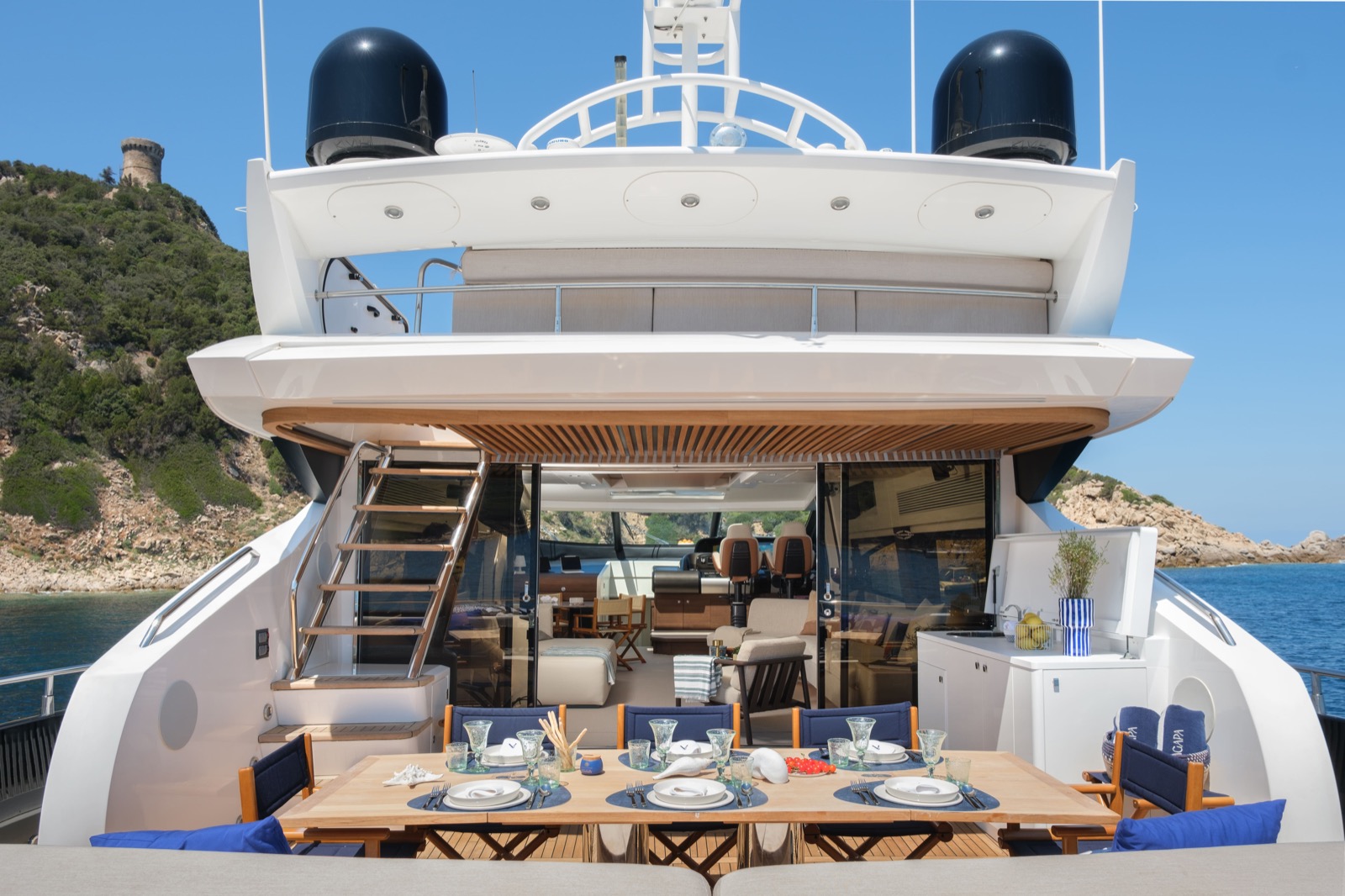
A week at sea is not chosen in the way one books a hotel room. In any guide to yacht charter by the week, the first question is not simply where to go: it is what rhythm of life you expect on board. A high-performance yacht, a family boat with stabilisers, a crew of four or a private chef all answer very different briefs.
The Mediterranean offers remarkable itineraries from the Côte d'Azur, but it also imposes its own realities: berth availability, weather, passage distances, fuel consumption, regulations and seasonal crowds. A successful charter rests on decisions made carefully, long before anyone steps aboard.
Choosing the right yacht for a week
Length is a useful benchmark, but not a sufficient one. For the same number of guests, two 20 metre yachts can deliver entirely different experiences: one favouring generous exterior space, the other interior volume and comfort at night. Cabin layout, the quality of the air conditioning, sound insulation and the bathing platform matter far more than a flattering specification sheet.
Over a full week, the number of nights aboard makes ergonomics essential. A family with children will often look for easily accessible cabins, an attentive crew and suitable water toys. A group of friends will lean towards a large flybridge, a fast tender and generous entertaining areas. A couple may prefer something more intimate, with a particularly well-appointed owner's suite and discreet service.
The choice between motor yacht and sailing yacht also deserves to be addressed openly. A motor yacht shortens transit times and makes multiple stops easier, at the cost of higher fuel consumption. A sailing yacht offers a more direct relationship with the sea and calmer passages, but the programme depends more on the wind, on the crew's experience and on the guests' preferences. There is no absolute best choice, only a boat consistent with your expectations.
The crew as part of the experience
Over a week, the crew do far more than run the yacht. They determine the standard of service, the planning of each stop and the atmosphere aboard. A captain who genuinely knows the area will avoid a bay that has become too exposed, suggest an elegant alternative to an overcrowded marina, or adjust a passage in line with the forecast.
Crew numbers should match the level of service expected. On some yachts, a captain and a stewardess are enough for a straightforward programme. On a larger yacht, a chef, deckhands and one or more stewardesses allow for a smoother experience, particularly with a full guest list. The quality of a crew is measured less by their visibility than by their ability to be there at the right moment.
Weekly yacht charter: establishing the real budget
The charter fee forms the basis of the budget, but it rarely represents the full cost of a week. Depending on the contract and the type of yacht, operating expenses must be allowed for: fuel, provisioning, drinks, berthing, deliveries, transfers where applicable and relevant taxes. These are commonly handled through an advance provisioning allowance, later reconciled against receipts.
Fuel is the most sensitive variable. It depends on the size of the yacht, its speed, the sea state and the itinerary. Sustained cruising between several destinations has a very different impact from a programme centred on the anchorages of the Riviera. Sound advice therefore means costing several realistic scenarios rather than presenting an unduly optimistic estimate.
Berthing can also weigh heavily, particularly in Saint-Tropez, Cannes, Monaco or the islands at the height of summer. Anchoring often provides a pleasant alternative, but it does not suit every condition or every guest. The decision depends on the comfort sought, the weather and the access required to restaurants, beaches or commitments ashore.
Before confirming, ask for a clear breakdown of what is included, what falls under the advance provisioning allowance and which costs may vary. That transparency prevents misunderstandings and allows you to enjoy the week without weighing up every stop against a poorly defined budget.
Building an itinerary that leaves room for the sea
The most common mistake is trying to cover too much ground. On paper, Cannes, Saint-Tropez, Porquerolles, Corsica, Sardinia and Monaco can all look achievable in a week. In practice, such a programme turns the yacht into a means of transport and reduces the time given over to anchorages, swimming and life on board.
Departing from Antibes or Cannes, a week can sit very comfortably around the Îles de Lérins, Saint-Tropez, Pampelonne and the Îles d'Hyères. That itinerary alternates short passages, lunches at anchor and livelier stops. For a cruise towards Corsica, it is better to accept longer crossings and build a less scattered programme, with stops chosen for their quality rather than their number.
The time of year changes the experience considerably. July and August offer maximum atmosphere, but also more traffic, more advance booking and busier anchorages. June and September suit clients looking for calmer seas, easier arrangements ashore and often excellent weather. In May or October conditions can be superb, provided you accept a more flexible programme.
A good itinerary allows for options. A bay sheltered from an easterly, a fallback marina in strong winds, a restaurant reachable by tender and one day with no obligatory passage give the captain the latitude needed to protect guests' comfort.
Booking at the right time and checking the terms
For the most sought-after weeks, particularly between mid-July and the end of August, the search should begin several months ahead. The best-maintained yachts, the most highly regarded crews and the most convenient dates go first. Planning early does not mean rushing: it allows you to compare available yachts methodically and to negotiate on clear terms.
The contractual documentation warrants close reading. The contract should set out embarkation and disembarkation times, the number of guests permitted, the insurance framework, cancellation terms, ancillary costs and any cruising restrictions. Pets, events alongside, the use of water toys or the presence of very young children may also call for specific arrangements.
It is worth sharing the group's preferences before boarding: dietary habits, allergies, preferred wines, medical requirements, level of experience with water sports, language of service and any special occasions. These details are not incidental. They allow the crew to prepare the week with judgement and without unnecessary improvisation.
What to look at beyond the photographs
Charter photography rarely conveys the standard of maintenance, the noise level under way or the true condition of the equipment. Over a week, these are precisely the things that make the difference. A yacht should be selected for its reliability, its cleanliness, the condition of its cabins, the practicality of its bathrooms and the genuine availability of its equipment.
Stability is another practical matter. Zero-speed stabilisers markedly improve comfort for anyone sensitive to roll, without eliminating the effects of a developed sea. The tender, paddleboards, snorkelling equipment and jet ski should also correspond to what is actually permitted and available. An honest selection is worth more than the promise of equipment that is absent or unusable.
This is precisely the role of an experienced intermediary: to assess the yacht, to know its operating history and to ask the questions brochures do not address. At YachtDeals, this operational reading of the boat forms part of the advice given before booking, alongside the choice of destination and the analysis of the budget.
Preparing to board without complicating the week
A soft bag is generally more practical than rigid luggage, which is often difficult to stow in the cabins. Pack light clothing, effective sun protection, a jacket for the evenings and footwear suitable for use on board. Heels, marking soles and bulky items sit poorly with a yacht under way.
Boarding is also the moment to speak frankly with the captain. Set out your priorities: time ashore, quiet anchorages, water sports, dining, cruising or coastal exploration. The programme can then be adjusted from the first day. A well-prepared week does not try to fill every hour: it leaves you free to enjoy the sea when conditions are at their best.