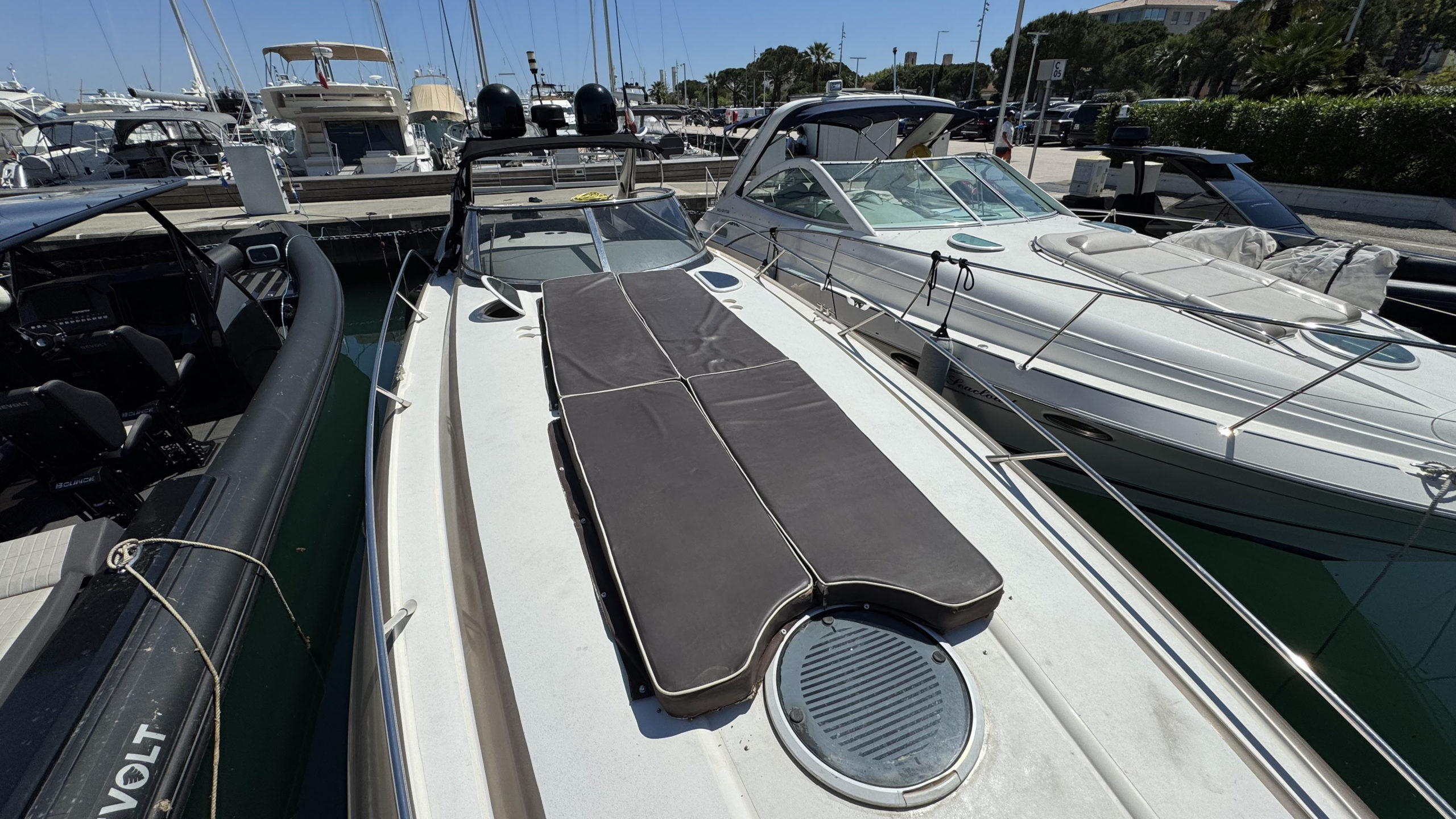
A yacht can look highly desirable on paper and still sit on the market for several seasons. On the French Riviera, where supply is plentiful and buyers are unusually well informed, selling a yacht is never simply a matter of publishing a few photographs and setting an ambitious price. It rests on a precise reading of the vessel, her history and her true standing against competing models.
An owner preparing a sale legitimately expects discretion, a controlled timetable and a result consistent with the value of the boat. That calls for method. A price positioned poorly, an incomplete file or a badly prepared viewing can cost more than a firm negotiation conducted at the right moment.
Selling on the Riviera: the right price above all
The first issue is valuation. It cannot rest solely on the asking prices of other yachts of the same length. Two apparently comparable vessels may differ significantly in value according to their engines, maintenance, running hours, equipment, VAT status, flag or the quality of their refit.
The value of a yacht between 12 and 40 metres also depends on how she has been used. A boat run with a regular crew, technically monitored and used sensibly inspires more confidence than one that has lain idle for long periods or whose works have been deferred. Experienced buyers do not stop at the model year. They are trying to anticipate the cost and the level of risk of the first two seasons of ownership.
A serious valuation therefore weighs three realities: the asking price on the market, the price at which comparable vessels actually change hands, and the objective condition of the yacht in question. The right price is not necessarily the lowest. It is the one that justifies a viewing, withstands survey and leaves reasonable room for negotiation without damaging perception of the boat.
Conversely, testing an excessive price for a few months is rarely neutral. The market's first enquiries are often the most qualified. When a yacht remains visible for too long with no clear movement, her value becomes harder to defend. A late reduction may then be read as the sign of a problem, even when none exists.
Preparing the yacht as an asset, not as a memory
An owner knows the qualities of his boat, the cruises she has made possible and the improvements she has received. A buyer, by contrast, is assessing what he will have to manage after signature. The presentation must therefore answer his questions before the viewing even takes place.
The sales file deserves particular attention: maintenance invoices, engine and generator service history, antifouling and hull works, available certificates, an equipment inventory, VAT status, registration papers and any berth or management contracts. The aim is not to bury the buyer in paperwork, but to demonstrate that the yacht has been administered rigorously.
Physical preparation matters just as much. Tired upholstery, cluttered storage, lingering odours or a poorly maintained deck immediately shape the tone of a viewing. Certain works pay for themselves before listing: thorough detailing, attention to small finishes, replacing badly marked fabrics or updating a few visual elements. Others call for careful judgement.
Undertaking a heavy refit purely in order to sell is not always sensible. On an older yacht, a future owner may prefer to choose the materials, joinery or electronics himself. It is important to separate what reassures technically from what is a matter of personal taste. That distinction avoids spending money without raising perceived value.
Choosing exposure suited to the yacht
Visibility is necessary, but marketing without strategy can harm a sale. In the premium segment, a yacht must be presented in the right markets, with accurate information, consistent photography and a message aimed at a credible buyer. The quality of enquiries counts for more than their volume.
The Riviera enjoys natural international exposure. Antibes, Cannes and Monaco bring together owners, crew, managers, yards and visiting buyers. That dynamic creates opportunities, but also considerable competition. A well structured central agency agreement allows exposure to be organised, feedback to be centralised, and prevents several parties presenting the same yacht with differing information or prices.
Depending on the vessel and the owner's wishes, marketing may be highly visible or more confidential. Broad exposure often suits a yacht whose positioning is clear and competitive. A more discreet approach may be preferable for an owner protecting his privacy, for a rare vessel, or for a sale requiring prior selection of the parties involved.
In either case, the content must be beyond reproach. Dated images, an imprecise description or an unverified equipment list waste time and undermine trust. A precise presentation does not overpromise. It encourages a viewing while setting the ground for a transparent discussion of the strengths, the works carried out and any limitations of the boat.
Qualifying the buyer before mobilising the yacht
A viewing is more than a commercial appointment. It often requires the availability of the owner, the crew, the marina and sometimes the yacht herself. When the vessel is cruising or on charter, careful organisation becomes essential.
Before arranging a viewing, it is reasonable to qualify the project: budget, timing, intended use, level of experience afloat, financing requirements and the possible involvement of a technical adviser. This step is not intrusive. It protects the seller's time and ensures the yacht is shown to someone whose plans are coherent.
The sea trial is then a decisive moment, though not necessarily part of a first viewing. It generally follows once interest is sufficiently established. The behaviour of the boat, noise levels, visibility from the helm, handling and comfort on board provide information no specification sheet can convey.
A broker's operational experience makes a difference at this stage. A former captain more readily identifies the relevant questions, the signals that warrant checking and the points that simply reflect normal use. At YachtDeals, this practical reading complements the commercial approach: the point is not only to sell a yacht, but to defend a transaction both parties can live with comfortably.
Negotiating without weakening the transaction
An offer is not judged on its figure alone. Its terms matter: deposit, acceptance period, survey schedule, conditions precedent, place of delivery, inventory included and the allocation of any works identified during survey. A slightly lower proposal from a buyer ready to move quickly within a clear framework can prove more solid than a high but uncertain offer.
Negotiation calls for candour. A seller has nothing to gain by concealing a known issue, as it will usually emerge during the survey. A buyer, for his part, must distinguish genuine defects, the normal observations associated with the age of a yacht and requests for reductions with no objective basis.
The survey is not a formality. It shapes the rest of the discussion. If it reveals significant works, several responses are possible: carrying them out before delivery, adjusting the price, or agreeing a properly documented retention. The right solution depends on urgency, contractor availability, the nature of the works and the buyer's willingness to oversee them himself.
Securing the sale through to handover
Signature does not truly close the process. Funds, title documents, deletion or transfer of registration, insurance, delivery, the inventory and, where relevant, familiarisation with the boat all remain to be coordinated. For a buyer unfamiliar with the vessel, practical training or a handover with a professional can prevent costly mistakes on the first outings.
The seller also benefits from planning this phase carefully. A well organised delivery, a clean yacht, ordered documents and a clear transition with the crew or manager leave a lasting impression. It is also the best way to limit misunderstandings after the sale.
Selling a yacht on the French Riviera calls for judgement rather than haste. A defensible price, honest preparation and a broker able to handle the technical detail create the conditions for a confidential, efficient sale that respects the value of your vessel.