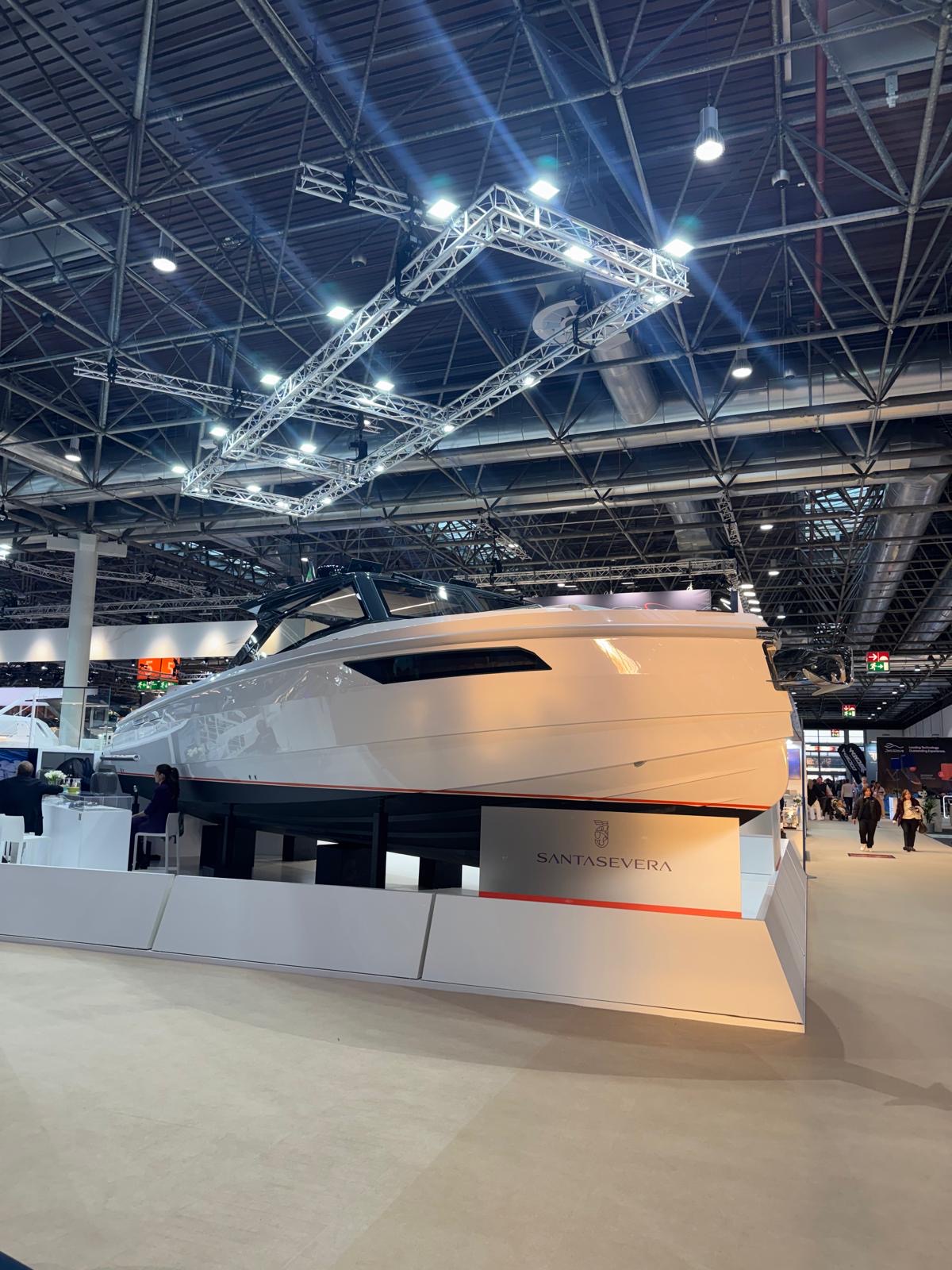
A yacht is rarely judged on her lines alone, or on a well presented specification sheet. When it comes to choosing between a new build and a pre-owned yacht, the real question is not purely one of budget. It concerns the fit between your cruising programme, your ownership horizon, your tolerance for delay and the degree of personalisation you expect.
On paper, a new build reassures and a pre-owned yacht looks more rational. In practice, the picture is more nuanced. A new yacht can answer a long term asset strategy or a very precise brief perfectly. A well chosen pre-owned yacht can offer remarkable value, provided she is examined methodically, beyond aesthetics and the engine hours on display.
New or pre-owned: the answer starts with how you intend to use her
Before comparing prices, the project needs to be defined. An owner who wants to be cruising the French Riviera this season does not share the priorities of a client preparing a 30 metre yacht with bespoke interiors, family use, a structured crew and possible charter operation.
If immediacy is the objective, pre-owned usually has the advantage. The boat exists, her behaviour is known, her equipment can be seen, and timescales are considerably shorter. Conversely, if you are seeking a very specific configuration, a particular yard signature or a highly refined use of space, a new build becomes legitimate, even with a longer calendar.
The first mistake is to think in absolute figures. The right reading is total cost and suitability to the programme. A heavily personalised yacht that is poorly adapted to resale can prove more expensive over time than a pre-owned unit well bought and well maintained.
The real advantages of a new yacht
The principal strength of a new build is not simply overall condition. It is control of the project. You choose the interior architecture, certain equipment, sometimes the performance, the technical options, the materials and the level of finish. For a demanding owner, this avoids second best compromises.
A new build also starts from a current technical base. Systems meet today's standards, yard warranties can secure the early years, and the history begins with you. Psychologically, that traceability has genuine value, particularly for buyers who want a clear picture from the outset.
There is also a benefit in terms of image and use. Entertaining aboard a new yacht, operating a boat configured to your habits, training the crew on a vessel conceived from the start for your programme: all of it counts. For some owners, that coherence fully justifies the initial investment.
The trade offs deserve to be stated plainly. A new build usually means construction lead times, numerous decisions, a commissioning phase and an initial depreciation that can be significant depending on size, yard and market conditions. Buying new without an ownership strategy or a view on resale is rarely the most rational decision.
What a new build asks of you
A new build project calls for time, attention and rigorous support. Between defining the brief, negotiating the contract, monitoring construction and technical acceptance, the purchase is far more than signing an order. It is a process. It suits clients who want to control the detail and who accept a longer calendar in order to achieve a very precise result.
Why pre-owned is often the more intelligent choice
In the premium market, a carefully selected pre-owned yacht often offers the best balance between value, availability and clarity. The initial depreciation has already taken place, the strengths and limitations of the model are known, and the boat may come with a higher level of equipment than an equivalent budget would allow on a new build.
In other words, for a comparable outlay, pre-owned frequently gives access to more length, more options or a more prestigious yard. For a pragmatic buyer, that gap is decisive.
The other advantage lies in what can actually be observed. A pre-owned yacht can be viewed, sea trialled and assessed in her real condition. You can study the maintenance history, the quality of the work carried out, the state of the joinery, the use of technical spaces, the cleanliness of the bilges and the standards of the previous crew if the boat is still in operation. These signals often say far more than any sales argument.
Everything depends on the selection, of course. A handsome presentation guarantees neither serious maintenance nor coherent ownership. This is where experience on the ground makes the difference. Two units identical on paper can in reality sit at very different levels of value and risk.
New or pre-owned: the question of total cost
The purchase price attracts all the attention, yet it tells only part of the story. The real subject is the total cost of ownership over three to five years. That includes routine maintenance, crew costs, berthing, insurance, upgrades, fuel, regulatory compliance and, above all, resale.
A new yacht will require less heavy work at the outset, but may suffer sharper depreciation in the early years. A pre-owned yacht costs less to acquire, but may call for technical or cosmetic updates if previous owners deferred certain investments.
Quick conclusions are therefore best avoided. An attractively priced pre-owned boat can become expensive if the generators, electronics, exterior upholstery or air conditioning systems are reaching the end of their cycle. Conversely, a yacht maintained without compromise, with invoices, a clear history and a recent refit, can represent a far healthier proposition than a new unit bought at the top of her value curve.
Depreciation is not uniform
Not all yachts depreciate in the same way. The yard, the reputation of the model, production volumes, engines, layout, flag and even the operating area all influence future value. A new boat that is highly atypical or over personalised can deter the secondary market. A sought after pre-owned model, well specified and correctly maintained, can by contrast be resold on good terms.
Points to watch before buying pre-owned
The pre-owned market rewards the methodical buyer. Structural condition matters, naturally, but so does the quality of maintenance over time. Little used engines are not necessarily good news. Reasonable hours with regular servicing are often preferable to prolonged inactivity.
A survey should never be treated as a formality. It must test the sales narrative against technical reality. Hull, mechanics, generators, stabilisation, electronics, hydraulics, air conditioning, safety, administrative compliance, any damage history: every item counts, because an error on these points quickly costs far more than the saving made at purchase.
The boat should also be assessed as a place to live. Circulation on board, noise underway, cabin ergonomics, ease of operation for the crew, engine room access, tender stowage, the genuine level of finish. A yacht can be appealing at first glance and disappointing in daily use.
When a new build is genuinely the right answer
A new build becomes particularly relevant in three cases. First, when no existing yacht answers your programme. Second, when personalisation is at the heart of the project. Third, when the ownership horizon is long, which absorbs the initial depreciation and gives real meaning to investing in a bespoke configuration.
It is also a coherent option for owners who wish to build in, from the outset, a clear approach to management, charter or tightly structured crew operation. Designing the boat with these parameters in mind avoids late and costly corrections.
All of which assumes demanding support. A shipyard sells a yacht. Independent advice protects your interest first, particularly on technical decisions, the coherence of the options and future value.
When pre-owned is the soundest decision
If you want to be on the water quickly, limit initial depreciation, access a better equipped yacht or simply test your actual usage before a more ambitious project, pre-owned is often the more accurate route. It also suits owners who recognise the value of a boat maintained with discipline, even if she did not leave the yard yesterday.
In this segment, quality of selection counts for more than the abundance of the offer. At YachtDeals, this reading of the market rests on a simple conviction: a yacht is not bought on data alone, but with judgement. Real condition, the coherence of the project and the quality of the advice weigh far more than an attractive listing.
Ultimately, choosing between new and pre-owned is not a question of prestige. It is a question of accuracy. The right yacht is the one that matches your use, protects your time and limits unpleasant surprises. When that equation is respected, the decision becomes clearer and the cruising begins in far better conditions.