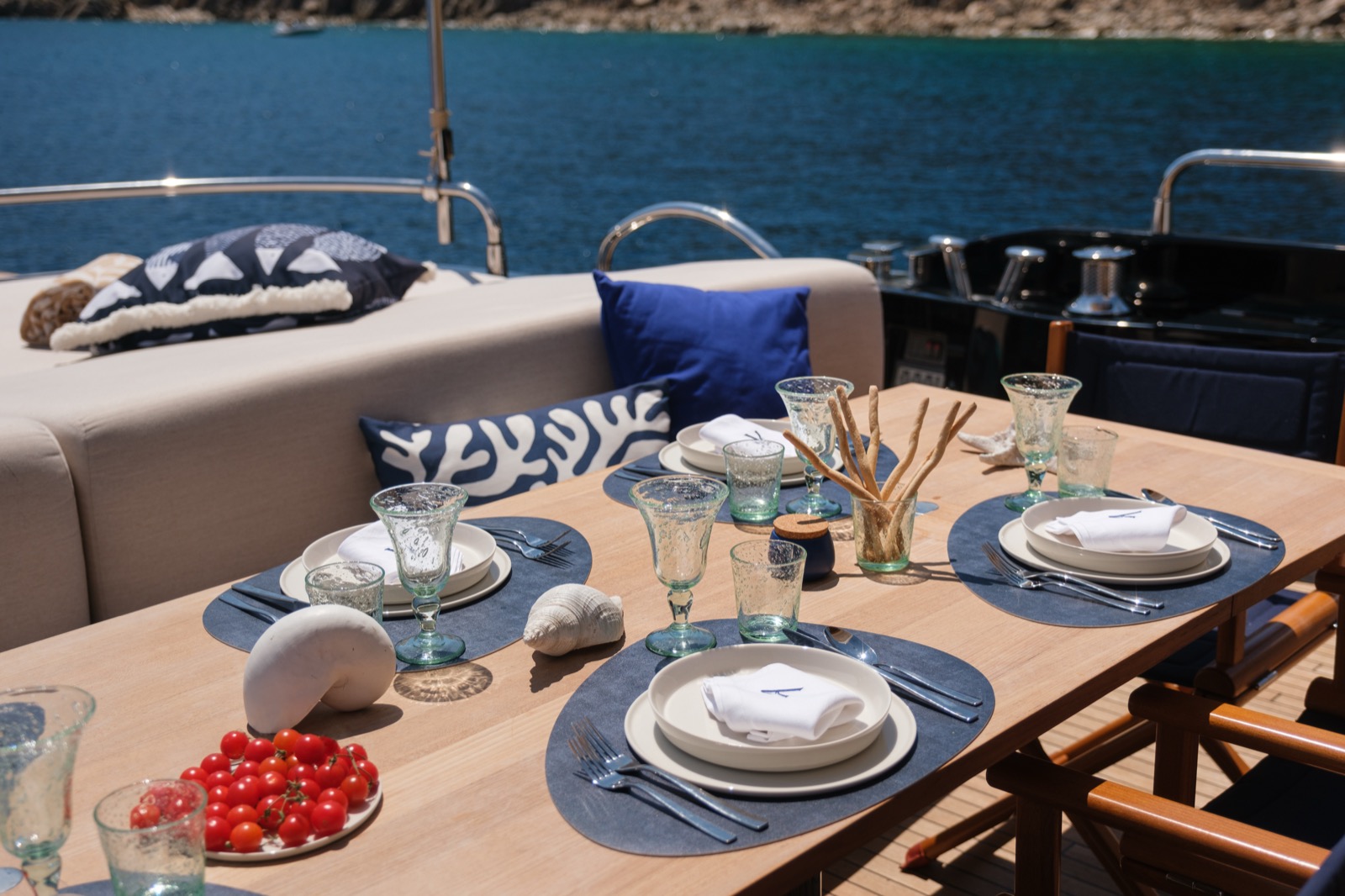
A yacht can look superb in photographs and disappoint the moment you step aboard. In luxury yacht charter, the gap between the sales pitch and the reality on board is expensive, in time as much as in experience. For a demanding client, the question is not simply finding a handsome vessel, but booking the right yacht, in the right format, with the right crew and within a clear contractual framework.
A luxury charter is about more than the yacht itself
At the premium end of the market, the value of a charter rests as much on the vessel as on the quality of the preparation behind it. Two yachts of comparable size can deliver very different experiences depending on maintenance, deck layout, noise levels underway, the quality of the guest cabins or the genuine competence of the crew. This is precisely where selection errors show up.
A 24 metre yacht may be ideal for a day out of Antibes or Cannes, then reveal its limits over a week with several couples on board. Conversely, a larger vessel is not always the better choice if the programme is straightforward, built around a few nearby anchorages and short passages. The right balance depends on guest numbers, the level of service expected, the pace of cruising and the degree of privacy sought.
A successful charter therefore begins with a proper qualification of the brief, not with a list of yachts sent out en masse.
Setting a realistic brief
Before comparing available yachts, the project needs to be clarified. A corporate day, a family weekend, a week with friends or a stay with children involve neither the same constraints nor the same expectations. Some clients prioritise interior volume, others want above all an easy flow between cockpit, sunpads and bathing platform.
The budget deserves the same precision. In luxury charter, the headline price is not always the final cost. Depending on the charter format, one must factor in fuel, taxes, provisioning, berthing fees, crew where not included, and any specific requests. A credible estimate is built around the itinerary and the way the yacht will actually be used, not on a theoretical basis.
Timing matters too. In high season on the Cote d'Azur, the best yachts are booked early, particularly for peak periods around Cannes, Monaco or Saint-Tropez. Leaving it late does not always make a project impossible, but it usually narrows the choice and increases the risk of compromising on the true quality of the yacht.
Day, weekend or week: the expectations differ
For a day charter, what matters most is often the smoothness of the experience. Access to the yacht, proximity of the departure port, stability at anchor, ease of water sports and the quality of service on board count for more than the number of cabins. Over a week, the priorities shift. Range, the layout of private spaces, air conditioning, stowage, sound insulation and the ability of the chef take on a different importance.
This is often where experienced advice makes the difference. A yacht that is very appealing for a few hours out may be less coherent over a longer cruise.
The criteria that warrant genuine verification
The first check concerns the actual condition of the yacht. A well maintained vessel reveals itself in details that rarely appear in a brochure: upholstery, joinery, the quality of seals, the cleanliness of technical spaces, the consistency of equipment, maintenance history and the general standard of care. A yacht can be recent and poorly looked after, just as an older vessel can be remarkably well kept.
The second point is the crew. At the top of the market, human competence counts as much as metres. A good captain does more than navigate correctly. He anticipates the weather, chooses a sensible anchorage, manages the rhythm of the guests and maintains safety without unnecessary rigidity. The rest of the crew must operate to the same standard, with discretion, consistency and attention to detail.
The fit between yacht and programme also needs examining. Draught, cruising speed, consumption, genuine berth count, the presence or absence of stabilisers, water toys, capacity alongside or at anchor: all of these have a direct bearing on comfort. They should be assessed in the context of the project, not in isolation.
Why deck layout and flow on board matter
Many decisions are made on flattering photographs. That is not enough. The deck layout determines life on board. Poorly conceived circulation between exterior spaces, a flybridge with little shade, an undersized aft platform or an unwelcoming main saloon can all limit how the yacht is actually used.
For families, safe movement around the yacht and easy access to the water are essential. For entertaining, the ability to serve a comfortable lunch to all guests matters more. For a private cruise, the separation between guest areas and crew zones can become the deciding factor.
Contract, insurance and terms: the grey areas to avoid
A premium charter must rest on a clear framework. The contract should specify the yacht, the dates, the departure port, boarding times, cancellation terms, payment arrangements, inclusions and exclusions. Where a point remains vague, it usually becomes a source of friction.
Insurance should not be treated as a formality. Cover for the yacht, administrative compliance, the authorised navigation area and the responsibilities of each party all need to be verified. For certain programmes, particularly those crossing several jurisdictions or involving specific requests on board, a thorough review is essential.
Variable costs deserve particular attention. Fuel in particular can significantly alter the final figure depending on the profile of the yacht and the pace of cruising. A programme with numerous fast transfers will not have the same cost structure as a stay based around nearby anchorages. Here again, transparency from the outset protects the relationship.
The Cote d'Azur: why local context shapes the selection
The Cote d'Azur offers an exceptional choice of yachts, along with some very specific constraints. Between Antibes, Cannes, Monaco and Saint-Tropez, port practices, availability windows, maritime traffic and the demands of certain events all influence how suitable a given yacht will be. A vessel well suited to a discreet programme off the Iles de Lerins is not necessarily the best choice for a dense sequence of appointments during a show or a congress.
Anchoring, landing guests, tender access, catering logistics and the management of timings quickly become operational matters. In this market, hands-on experience counts for more than simple intermediation. It is one of the reasons why houses such as YachtDeals favour rigorous selection over volume.
The right yacht is not always the most spectacular
In the yachting imagination, size impresses. In practice, coherence prevails. A more discreet yacht, very well maintained, with a faultless crew and a configuration perfectly matched to the programme will often deliver a better experience than a more demonstrative vessel that is less consistent.
The same logic applies to value. The cheapest option becomes expensive if the service falls short, if the condition of the yacht disappoints or if additional costs were poorly presented. A charter priced properly, with a consistent standard of execution, protects the client's time and the quality of the stay.
How to recognise serious guidance
A reliable broker asks precise questions before proposing yachts. He seeks to understand the programme, the exact number of guests, how the client lives on board, the level of service required, calendar constraints and the real budget. He is also willing to rule out a yacht that looks appealing on paper when it does not suit the project.
Such guidance is also recognisable by its candour. Saying that a yacht is not the right choice, explaining why a route is unrealistic in the time available, or pointing out that a supplement will be unavoidable is all part of the service. In this business, trust is worth more than a quick signature.
Finally, the role of the adviser is to filter. The premium market offers a great deal, but not everything on it is equally reliable. A serious shortlist avoids wasted viewings, poorly informed decisions and unwelcome surprises on the day of embarkation.
Choosing a luxury charter is not a matter of buying a backdrop. It is organising a complex experience in which yacht, crew, contract and programme must be perfectly aligned. When that alignment exists, everything feels effortless on board. That is usually the sign that, beforehand, nothing was left to chance.