A yacht can look faultless alongside, immaculately prepared for a viewing, and still be the wrong boat for its future owner. Mistakes made when buying a luxury yacht rarely stem from a lack of means or experience. More often they follow a decision taken too quickly, a budget assessed at half its true level, or a technical inspection treated as a formality.
In a market where vessels can resemble one another more closely in photographs than in reality, an acquisition should be run as both an asset project and an operational one. The right boat is not simply the one that appeals on the day of the viewing. It is the one that can be run, maintained and sold on in good conditions.
1. Buying for image rather than for use
The first question is not "which yacht appeals to me?" but "how will I actually use her?" A 25 metre vessel designed to host twelve guests for the day will not necessarily suit a family intending to spend several weeks aboard. Equally, a striking sport yacht may impose constraints on comfort, consumption or range that sit awkwardly with a regular cruising programme.
Define the usual number of guests, the cruising grounds, whether or not there will be crew, the nights aboard and the expected frequency of use. An owner based between Monaco and Saint-Tropez will have very different priorities depending on whether the yacht is used mainly for day trips, for crossings to Corsica, or occasionally chartered to offset running costs.
Size is a trade-off in itself. The larger the boat, the greater the volume, the stability and the capacity to entertain. But crew, berthing, maintenance and insurance costs rise quickly. The best compromise is rarely the largest model within reach at the time of purchase.
2. Underestimating the true cost of ownership
The purchase price is only the starting point. A luxury yacht should be considered on a total annual cost basis, with a sufficient margin for the unforeseen. Hauling out, engine servicing, electronics, air conditioning, generator, safety equipment, insurance, berthing, winter storage, crew and fuel make up a burden that varies considerably with age, builder, cruising programme and the owner's standards.
The mistake is to settle for a theoretical estimate expressed as a percentage of the purchase price. That approach gives an order of magnitude, but it is no substitute for analysing a specific vessel. A recent yacht under warranty and properly followed does not present the same profile as a ten year old boat whose engines, stabilisers or deck equipment are approaching a major milestone.
Before making any offer, ask for maintenance records, significant invoices, the most recent works carried out and the interventions expected in the near term. Reupholstering may be a matter of taste. Replacing a generator or upgrading ageing electronics is a far more structural item of expenditure.
3. Mistaking good presentation for sound condition
An immaculate interior, freshly cleaned teak and well ordered documentation all create a favourable impression. They are not proof of good condition. The pre-purchase survey must be independent, thorough and proportionate to the value and complexity of the boat.
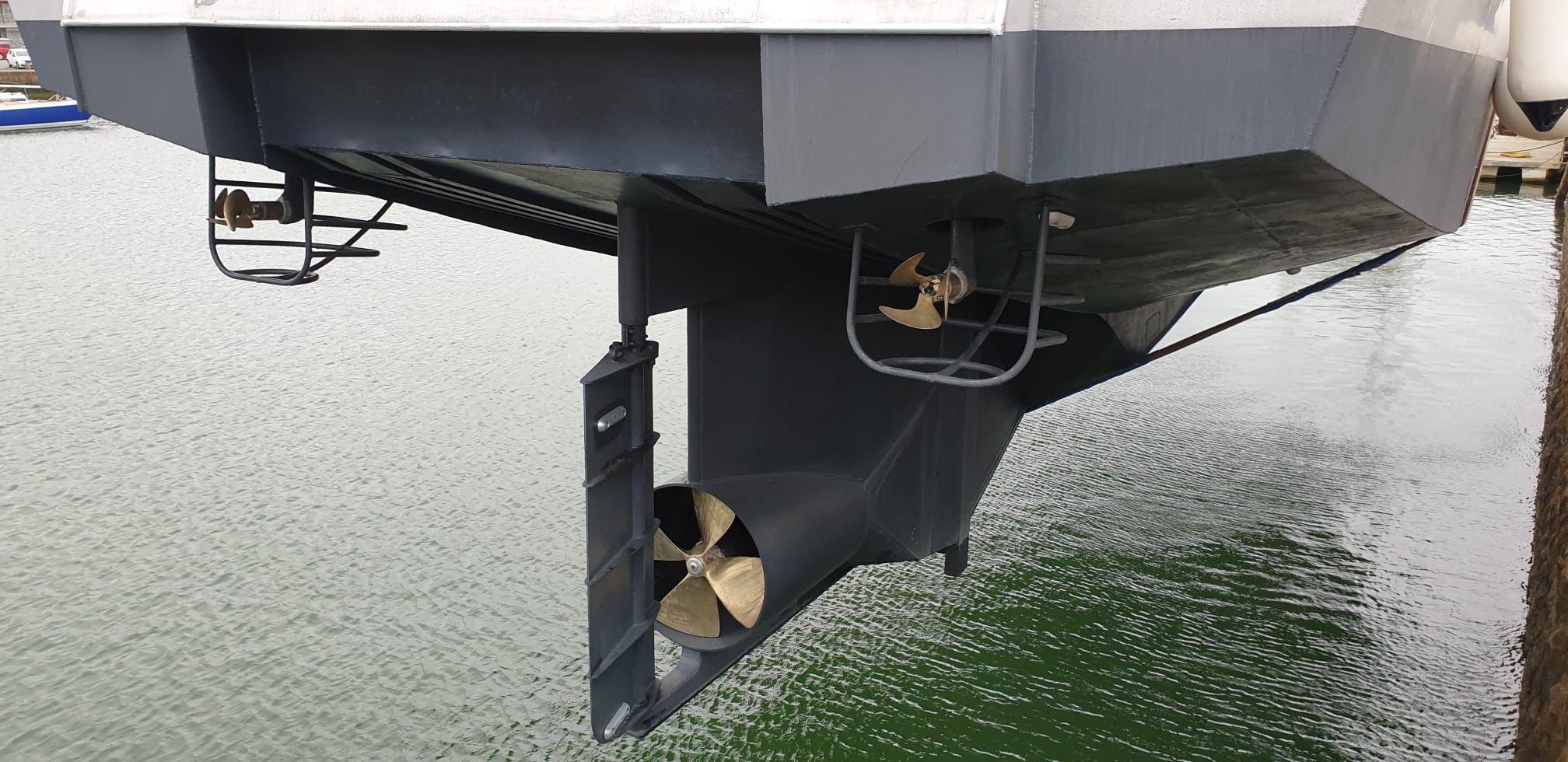
It does not stop at a visual inspection in port. It normally includes a sea trial, a haul-out where relevant, and checks on the hull, the underwater sections, the propulsion, the electrical systems and the safety equipment. Engine readings, alarm histories and the consistency of running hours all deserve particular attention.
The sea trial reveals what the quay does not
The sea trial is often the moment when vibration, abnormal smoke, overheating, imprecise handling or equipment faults come to light. It should be conducted in conditions that allow the boat to be observed at various engine speeds, with checks on the controls, noise levels and essential systems.
Some discrepancies are normal on a pre-owned vessel and can be negotiated. Others point to poor maintenance or a technical risk that should prompt a review of the price, the terms of sale or, on occasion, the project itself. Candour is more useful than a reassuring diagnosis at any cost.
4. Overlooking documentation and ownership structure
One of the principal mistakes when buying a luxury yacht is leaving the paperwork until after the commercial agreement. Title, any registered mortgage, VAT status, flag, any leasing arrangements and the history of previous owners must all be clarified before signature.
Sound documentation protects the buyer, but it also determines how the yacht can be used thereafter. Whether she can be offered for charter, cruise in certain areas or be registered under a given flag depends on precise rules. These matters call for coordination between broker, surveyor and legal and tax advisers where the situation requires it.
An attractive price can conceal a complex holding structure or incomplete documentation. That is not necessarily a deal breaker, but it should never come to light days before delivery. Closing should remain a controlled stage, not a race against the clock.
5. Negotiating the price without negotiating the terms
A good purchase is not simply the figure on the contract. The terms of the offer matter just as much: deposit, the length of the due diligence period, access to documents, sea trial arrangements, the option of a haul-out, how defects are dealt with, the inventory of equipment and the delivery timetable.
A serious seller will generally accept a clear process. Conversely, excessive pressure to sign immediately, an inability to obtain invoices or a refusal to allow a sea trial should give pause for thought. A buoyant market is no reason to forgo fundamental checks.
Negotiation should also take account of the works identified during the survey. It may be preferable to have a specific job carried out at the seller's expense rather than to obtain a price reduction that is hard to quantify. Much depends on urgency, parts availability and whether the boat can be laid up before the season.
6. Forgetting that a berth is an asset in its own right
On the French Riviera, a suitable berth can be harder to secure than a yacht meeting the brief. Permitted length, beam, draught, transfer conditions, contract duration and annual cost should all be verified before acquisition.
Buying a 20 metre boat without a coherent mooring solution can immediately compromise ease of use. A temporary berth, one far from home or one that does not suit the yacht's exact dimensions is not always a lasting answer. Alternative arrangements for winter storage, stopovers and maintenance periods should also be anticipated.
The berth also influences resale value and the appeal of a vessel intended for charter. In some cases, access to a well situated spot can weigh as heavily in the decision as a few additional options aboard.
7. Failing to prepare for resale from the outset
Resale feels distant at the time of purchase. Yet it is prepared for from day one. A sought-after yacht, well documented and maintained to the builder's recommendations, will hold its value better than one modified without coherence or run without rigorous records.
Highly personal fit-out choices may be entirely justified if the boat is above all for private use. They can nonetheless narrow the pool of potential buyers at resale. The balance lies between personal enjoyment and clarity in the market. Keeping works files, survey reports, manuals and invoices allows the standard of care to be demonstrated to the next owner.
Support does not end at delivery
Familiarisation, training on the equipment, introductions to a captain or technical team and the organisation of the first services are the stages that genuinely secure the project. A well supported owner uses the boat more and makes better maintenance decisions.
At YachtDeals, operational experience is precisely what allows a vessel to be assessed beyond its appearance, and the buyer to be supported through the first passages. That continuity prevents delivery from marking the start of unwelcome surprises.
A successful yacht purchase leaves room for enjoyment, not uncertainty. Taking the time to define the programme, inspect the boat and frame every condition of sale is usually the most elegant decision, and the most profitable, before heading out to sea.