Berthed in Antibes or Monaco, two yachts of identical length can carry very different budgets. One is ready to cruise all summer; the other calls for technical upgrading, a larger crew or a berth that is hard to secure. Asking how much a yacht costs is therefore not a matter of finding a list price: it means assessing the true cost of a cruising programme.
For a purchase between 12 and 40 metres, a sound budget rests on three elements: the acquisition price, commissioning costs and the annual cost of ownership. The quality of the vessel, her history and the intended use matter far more than her build year alone.
How much does a yacht cost to buy?
The market covers a considerable range. A well maintained pre-owned motor yacht of 12 to 15 metres with suitable engines will often sit between 250,000 and 1.2 million euros. New build in the same category generally starts around 700,000 euros and can exceed 2 million depending on the brand, engines, finish and equipment.
Between 16 and 20 metres, a budget of 700,000 to 3 million euros is common on the brokerage market. A new yacht of this size more often trades between 1.8 and 5 million euros. From 24 metres, the change of scale is clear: permanent crew, more structured technical management, berthing constraints and maintenance costs all become significant items.
For vessels of 21 to 30 metres, brokerage prices can range from 2 to 10 million euros, and higher for a recent model from a well regarded yard. Above 30 metres, a well positioned pre-owned yacht may represent 7 to 25 million euros or more. In new build, a 30 to 40 metre project routinely passes 15 million euros, depending on the level of customisation.
These ranges are no substitute for proper market analysis. A boat offered at an attractive price may require several hundred thousand euros of deferred works. Conversely, a more expensive yacht with a full service record and a recent refit can prove the more rational choice over several years.
The factors that move the price
Length remains a useful reference, but it explains only part of the picture. The yard, the model's reputation, engine hours, the quality of the navigation equipment, the condition of the stabilisers, air conditioning, generators and the maintenance records all bear directly on value.
Build year also counts, without being decisive. A ten year old yacht maintained without compromise, with documented refits and renewed equipment, may be preferable to a younger vessel that has cruised little but been poorly looked after. In this market, actual condition outweighs the promise of a specification sheet.
Configuration matters too. A yacht designed for day trips does not carry the same demands as one able to accommodate eight to twelve guests over several nights. Crew cabins, range, tenders, bathing platforms, water toys and at anchor stabilisation affect the purchase price as much as the running costs.
The budget after purchase: the true cost of a yacht
A frequently quoted benchmark is to allow between 8% and 15% of the yacht's value each year for operation. That estimate is a useful starting point, but it must be adjusted for the size of the boat, her age, where she is kept and the number of weeks cruised.
On a vessel under 20 metres without permanent crew, the annual budget can be kept in check if the owner cruises sensibly and plans maintenance ahead. From 24 metres, fixed costs weigh more heavily, even when the yacht stays alongside.
Berthing and winter lay-up
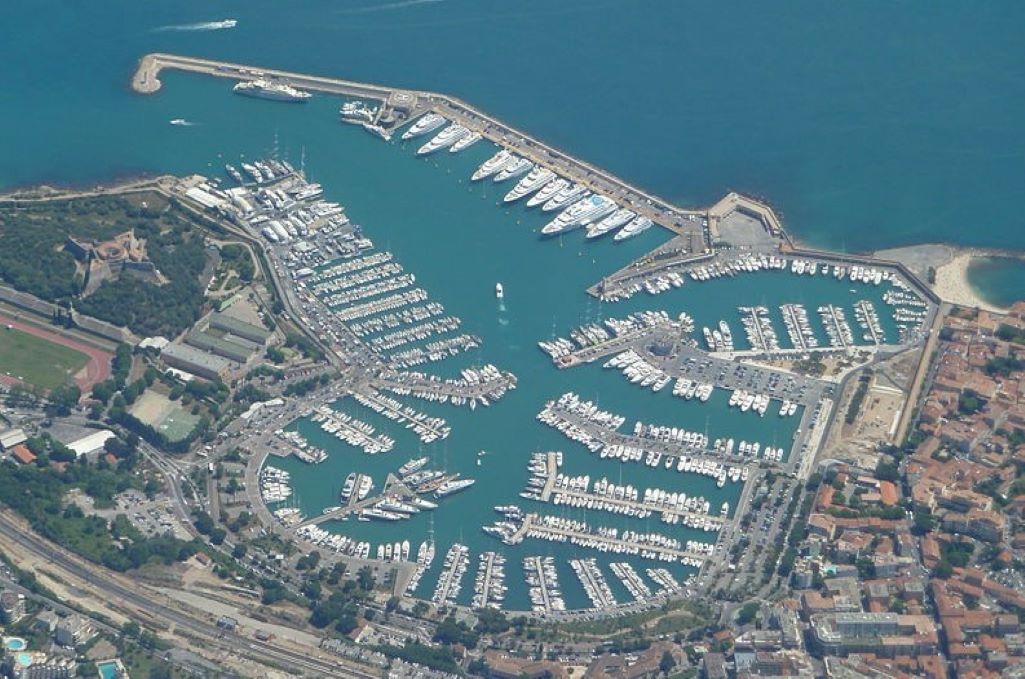
On the Cote d'Azur, a suitable berth is a scarce asset and a substantial budget item. Rates vary with length, season, port, services and availability. Cannes, Antibes, Saint-Tropez and Monaco cannot be compared on price alone: access, shelter within the basin, ease of provisioning and proximity to the crew all count.
Depending on the cruising programme, winter lay-up, hull work and lifting must also be considered. These operations are predictable, but their cost rises quickly with the size and displacement of the yacht.
Fuel, maintenance and insurance
Fuel is the most visible item, particularly for a fast or heavily used yacht. It depends on the engines, cruising speed, hull condition, load on board and the programme. Cruising at moderate speed does not produce the same figure as a succession of fast passages between the Riviera, Corsica and Sardinia.
Routine maintenance covers engine and generator servicing, consumables, hull treatment, safety equipment, electronics, air conditioning and unforeseen work. On a quality yacht, deferring maintenance is rarely a saving. It affects reliability on board, resale value and, at times, the availability of the boat during the season.
Insurance varies with value, flag, cruising area, the experience of the owner or captain, and the yacht's claims history. Properly calibrated cover deserves close attention, particularly where the boat is operated in charter.
Crew and technical management
As soon as the size of the yacht, the level of service or the cruising calendar justifies it, a captain or crew becomes necessary. Beyond salaries, allowance must be made for social charges, relief cover, training, travel and the costs of living on board.
Technical management brings valuable discipline: tracking deadlines, planning works, supervising suppliers, keeping records, coordinating interventions and reporting to the owner. For a buyer who wishes to enjoy time on board without handling day to day surprises, this service is far from incidental.
Acquisition costs: what the asking price does not always include
The negotiated price is a starting point, not the final figure. Before delivery, allowance should be made for the pre-purchase survey, sea trial, verification of title, flag formalities, insurance, any delivery passage and initial upgrades.
A thorough survey can reveal mechanical, structural or cosmetic works that justify renegotiation, a retention or walking away from the project altogether. It should never be treated as a formality. It is one of the few moments at which a buyer can obtain an independent reading of the yacht's condition before committing.
Tax treatment and the VAT position depend on the buyer's circumstances, the flag, the boat's history and whether use is private or commercial. There is no universal answer. These points must be settled with competent advisers before signature, not corrected after delivery.
Buy new, buy pre-owned or charter?
A new yacht offers a bespoke configuration, builder's warranties and current equipment. In return, the delivery lead time, the budget and the initial depreciation must be accepted. A well managed build project allows the essential choices to be controlled, provided a realistic specification is set from the outset.
The pre-owned market gives access to vessels available immediately, often better equipped than their price would suggest. It does, however, demand rigorous selection. The right pre-owned yacht is not necessarily the cheapest: it is the one whose history, condition and programme match the intentions of her future owner.
Chartering remains a sensible option for those who cruise little, wish to try several formats or prefer to avoid fixed costs. A few charter weeks a year can cost less than ownership while giving access to a very high level of experience. Buying makes more sense for regular use, where availability is essential, or where an owner wants a yacht configured to his own taste.
Building a budget that protects your decision
Before any viewing, it is wise to set not only a maximum purchase price but also a comfortable annual budget. This distinction avoids choosing a yacht that looks compelling alongside but proves disproportionate once berthing, maintenance, crew and works are taken on.
Experienced guidance allows listings to be measured against operational reality: ease of handling, quality of technical access, maintenance logic, resale value and consistency with the family or business programme. At YachtDeals, that assessment draws on hands-on experience of cruising and of managing high end vessels.
The right yacht is not the one that impresses most at first viewing. It is the one you can use with peace of mind, maintain properly and sell on good terms when your programme changes.