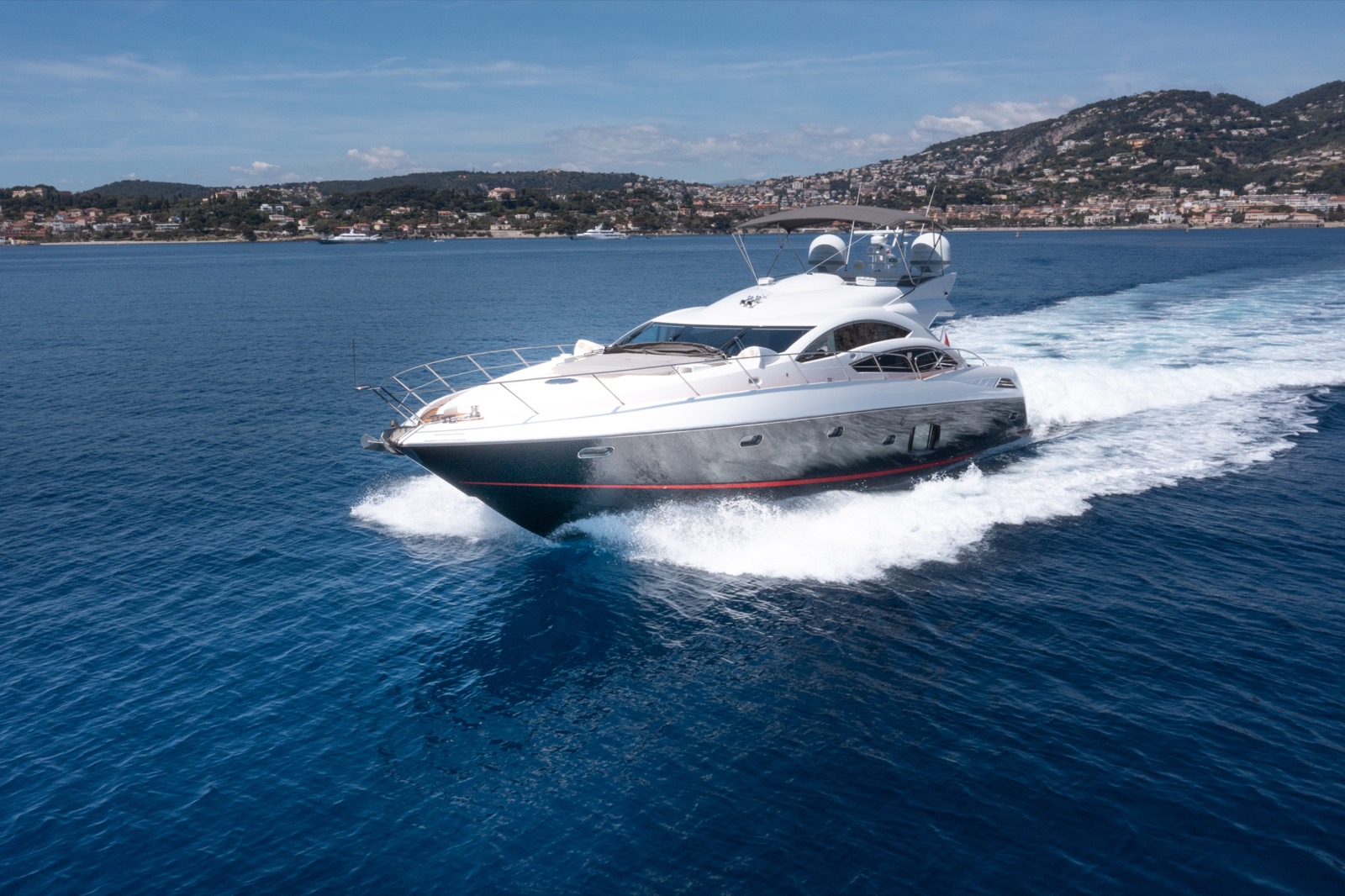
Beyond a certain level of expectation, booking a luxury charter yacht in the Mediterranean is not a matter of picking an attractive boat from photographs. The real question is simpler and far more decisive: which yacht, which crew and which itinerary genuinely suit the way you cruise, your pace and your standards of service? That is where the difference lies between a pleasant week and a flawlessly run experience.
The Mediterranean offers a considerable choice, from a day out of Cannes to a cruise of several weeks between the Cote d'Azur, Sardinia, Corsica, the Balearics or Greece. That abundance is an advantage, but it also makes the choice more technical than it first appears. Between very recent builds, carefully refitted yachts, outstanding crews and rather less outstanding ones, the market calls for judgement.
Why a Mediterranean luxury charter requires proper sifting
In this segment, two yachts of comparable size can deliver radically different experiences. Deck layout, acoustic insulation, behaviour at anchor, the quality of the bed linen, the crew's real ability to anticipate your habits, the condition of the tenders and toys: all of these shape the cruise in tangible ways. None of them is necessarily apparent from a brochure.
The Mediterranean adds constraints of its own. In high season, the best spots in certain anchorages are taken early, the most sought after marinas are full, and the weather, particularly with the mistral or in windier areas, can force quick decisions. A good charter is therefore judged not simply on the beauty of the yacht, but on how well it suits the chosen cruising ground and the time of year.
The nature of the project matters too. A day of corporate entertaining off Antibes answers to different criteria than a family week between the Italian Riviera and Corsica, or a highly discreet cruise with elaborate hotel service. The clearer the brief from the outset, the sharper the selection.
Mediterranean luxury charter: the right yacht for the right use
The first instinct is often to look at length. It is a useful indicator, not a sufficient one. A well designed 20 metre yacht, with an experienced crew and intelligently arranged spaces, can prove far more satisfying than a larger but less accomplished vessel.
For a day out or a long weekend, the main issue is usually flow. You want easy circulation on board, a comfortable aft deck, generous sunbathing space, a fast tender, a discreet but good quality audio system and straightforward boarding logistics. Certain open or sport yachts work very well here, provided you accept more limited range and accommodation.
For a week or more, the order of priorities changes. Interior volume, the quality of the guest cabins, storage, stability under way, air conditioning performance, the chef's ability and the captain's maturity all become essential. This is often where clients discover that a yacht that looks appealing alongside is not necessarily the best choice at sea.
Guest numbers alone are not enough either. Their profile counts. A couple with young children have different expectations from a group of friends accustomed to beach clubs, or from a business owner hosting partners on board. The right yacht is the one that serves the actual use, without unnecessary excess or poorly anticipated compromise.
Motor, sail, catamaran or explorer
In the Mediterranean, the motor yacht remains the most requested solution for its speed, flexibility and ease of access to ports of call. It allows more stops without complicating the organisation, and is often the best way to make the most of a busy week.
A sailing yacht answers a different expectation, one more attuned to the passage itself, to quiet and to a gentler relationship with time. It can be remarkable, but it calls for greater commitment to the programme and to the weather.
The luxury catamaran appeals through its volume and its stability at anchor. It works very well for families or for guests who value living space. Depending on the ports and the dates, however, its beam can make berth reservations more difficult.
An explorer or a more seaworthy cruising yacht makes sense for a long programme or for those seeking greater comfort at sea. Less demonstrative and often more rational, it is much appreciated by clients who value calm over immediate effect.
Which cruising ground to choose
The Cote d'Azur remains the reference for short departures, events, ease of access and the density of services. Antibes, Cannes, Monaco and Saint-Tropez allow elegant, efficient programmes, with a high standard of provision ashore as well as afloat. It is an ideal area if you wish to combine cruising, dining, hotels and business meetings.
Corsica and Sardinia belong to another register. The anchorages are often more spectacular, the water clearer and the distances better suited to genuine cruising. For a well planned week, the pairing works remarkably well. It does call for earlier booking, and for accepting that certain itineraries depend more directly on prevailing conditions.
The Balearics suit clients who want to alternate anchorages, life ashore and relatively simple passages. Ibiza and Formentera remain much in demand, though the experience can feel less private at the height of summer. Timing counts almost as much as the choice of yacht.
Greece, finally, offers exceptional diversity. It is perfectly suited to longer programmes or to regulars looking for something other than the Riviera. In return, air logistics, repositioning and certain operational constraints require more rigorous preparation.
The season changes more than the price
July and August concentrate demand, and with it the pressure on the best yachts. Yet June and September are often underrated. The sea is pleasant, the ports easier to breathe in, service ashore more fluid and the experience altogether calmer.
For a client used to high standards, that difference is significant. A very fine cruise at the peak of the season can be more expensive and less restful than a programme shifted slightly in the calendar. It depends on your priority: being at the centre of the season, or making the most of the yacht and the destination.
What sets a quality charter apart from a simple rental
The standard of service on board remains the true marker. A capable crew does not simply execute. It reads the rhythm on board, anticipates, adjusts and protects your time. That owes as much to experience as to the stability of the team.
Preparation beforehand matters just as much. A precise brief on culinary preferences, sleeping arrangements, scheduling constraints, children on board, expectations around water sports or the need for discretion transforms the quality of the week. Without that groundwork, even a very fine yacht can leave an incomplete impression.
Costs should also be discussed frankly. In charter, the headline rate does not always cover the whole of the operation. Fuel, provisioning, berthing, specific requests or repositioning can move the final budget appreciably. Serious advice does not seek to play these matters down. It frames them from the outset.
That is precisely what the most informed clients look for: a clear reading of the yacht's real value, of any limitations, and of the likely total budget. At YachtDeals, this approach rests on a simple principle: trust is worth more than a commission.
How to select without wasting time
An effective search begins with a few clearly stated criteria: number of guests, type of programme, possible departure ports, expected crew standard, the atmosphere sought on board and the overall budget. From there, the shortlist should deliberately remain tight. Too many options slow the decision and blur the differences in quality.
The second filter concerns the yacht's actual condition and the quality of its operation. Year of build is not everything. An older yacht, disciplined in its maintenance and intelligently updated, can offer a better experience than a recent one run without rigour. Here again, an operational eye saves a great deal of time.
Finally, the timing needs to be secured. The best yachts go early, particularly on the Cote d'Azur, in Corsica and in Sardinia. Waiting can occasionally bring an opportunity to light, but at the top of the market it more often leads to choosing by default rather than choosing well.
The right choice is rarely the most obvious one
In the Mediterranean luxury charter market, appearances count, but they are never enough. The quality of a cruise rests on very concrete details: a settled crew, a yacht consistent with your use, a cruising ground suited to the season, a budget explained without blind spots, and an adviser willing to say no when an option is not the right one.
For a demanding client, true luxury is not accumulation. It is precision. A well chosen yacht leaves you free to enjoy the sea, the time and your guests, without having to manage what should have been anticipated.