A yacht can look remarkable alongside and disappoint within the first hours at sea. In a surveyed yacht purchase, the point is not simply to find an attractive vessel, but to establish that she genuinely suits your programme, your standards and the running costs you are prepared to carry. Between Cannes, Antibes, Monaco and Saint-Tropez the market offers real opportunities. It also calls for an eye able to tell a well maintained yacht from one that is merely well presented.
A purchase handled properly protects your time, your capital and, above all, your enjoyment of being afloat. It begins with precise questions, sometimes less appealing than the choice of timber or the merits of a flybridge, yet far more decisive: how will you use the yacht? With what crew? How many weeks a year? Do you intend to keep her for the long term, offer her for charter, or preserve a straightforward resale?
Start with the programme, not the listing
The right length is not necessarily the one that makes the greatest impression in port. A 15 metre yacht can be perfectly suited to regular family outings and a few summer cruises. A 25 or 30 metre vessel implies a different organisation altogether: crew, handling, berth, maintenance, insurance and annual budget all take on another dimension.
The cruising programme also dictates the type of yacht. A sports open answers the desire for quick runs between the beaches of Pampelonne and the Iles de Lerins. A flybridge model favours living space and comfort on board. A displacement yacht offers range and stability for longer passages. No choice is universally better. It must be consistent with how you will actually use the boat, including outside the sunniest few weeks of the year.
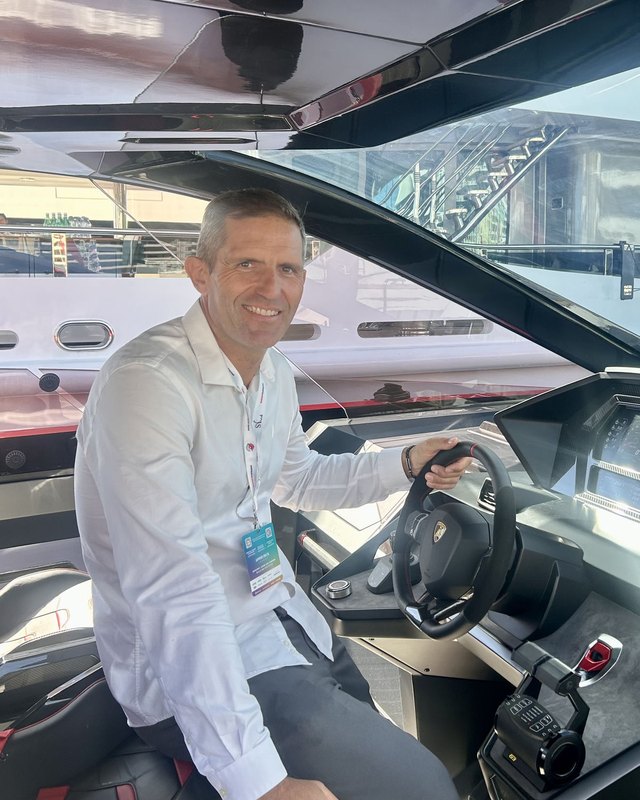
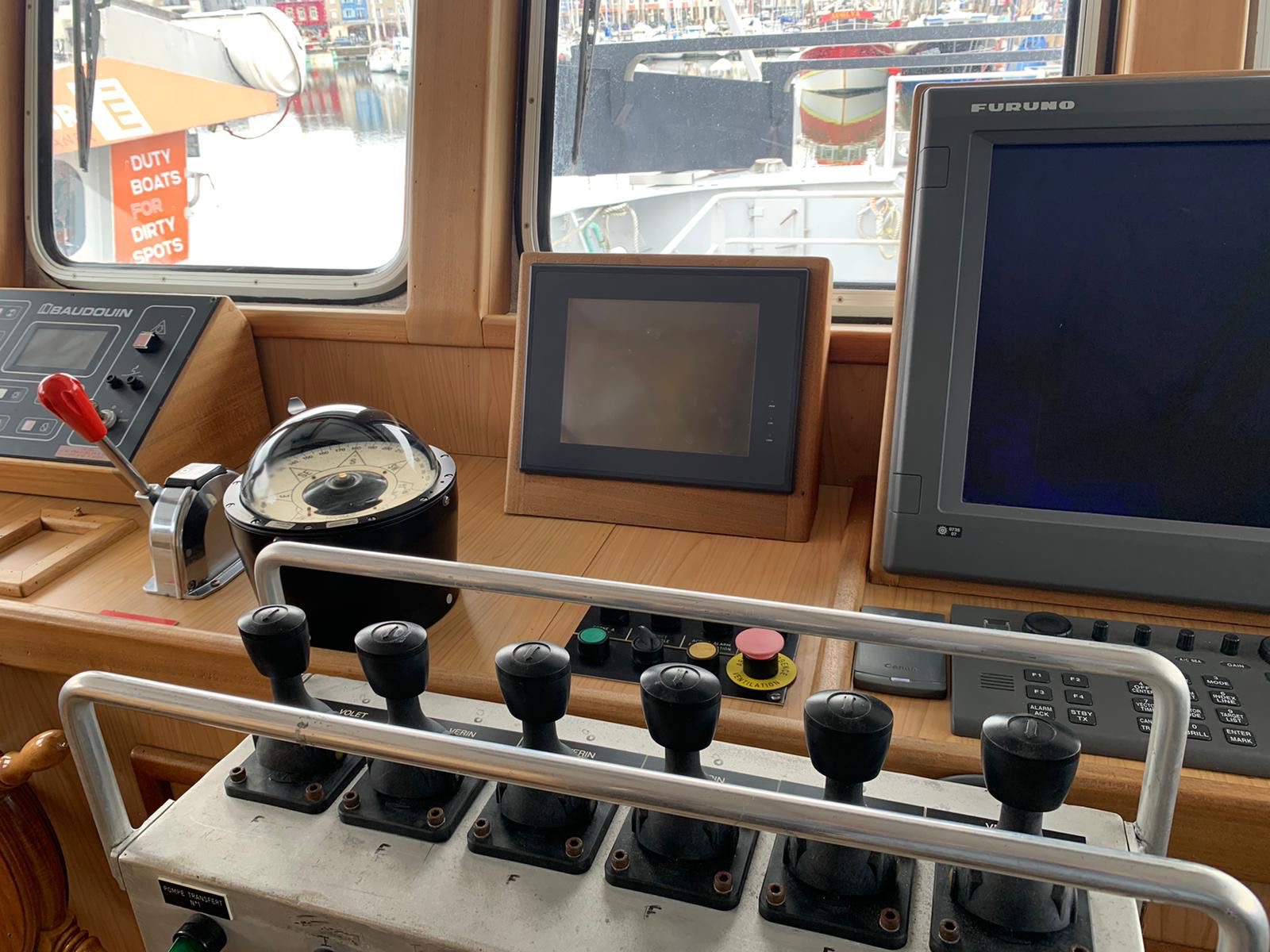
This qualification stage avoids two common mistakes: buying too large for the intended use, or favouring a spectacular but impractical layout. Circulation on board, headroom, cabin volumes, access to the water and the ergonomics of the helm station usually matter far more to the experience than secondary equipment.
A surveyed yacht purchase: looking beyond the visible
A viewing allows you to appreciate volumes, finish and general atmosphere. It is not enough to establish a yacht's true value. The condition of an engine room, the quality of the maintenance records, the consistency of engine hours or the wear on safety equipment all require an operational reading.
A pre-purchase assessment brings several elements together: the age of the boat, her past cruising programme, the seriousness of her maintenance, the replacements already carried out and those approaching. A recent vessel is not automatically safer than an older yacht kept to a rigorous standard. Conversely, an attractive price may reflect imminent works whose cost far exceeds the apparent saving against a better maintained example.
History deserves particular attention. Maintenance invoices, haul-out reports, work on engines and generators, stabiliser servicing, transmission overhauls, paintwork or upholstery: these documents tell the story of the boat. Complete, legible files are generally a good sign. An absence of traceability does not rule out an acquisition, but it should influence the price, the warranties sought and the level of caution applied.
The sea trial, a decisive test
A yacht is also judged under way. The sea trial reveals the behaviour of the hull, vibration, response at the controls, acceleration, course keeping and noise levels. It sometimes exposes faults that are impossible to detect alongside.
The boat should be tested at different speeds and the equipment that matters to your use checked: manoeuvring, thrusters, stabilisation, air conditioning, navigation electronics, tenders and entertainment systems. The precise list depends on the yacht, but the rule remains the same: never assume a system works simply because it is fitted.
The role of the independent surveyor
An independent pre-purchase survey provides a structured technical diagnosis. Depending on the project, it may include inspection ashore, examination of the hull and underwater sections, moisture readings, engines, electrical installations and onboard systems. It must be tailored to the type of yacht and her age.
The experienced broker does not replace the marine surveyor. The role is complementary: identifying the right vessel, putting technical findings into perspective, anticipating the budgetary consequences and organising a realistic negotiation. That coordination is valuable when seller, surveyor, yard, insurer and legal parties are spread across several countries.
Assessing the cost of ownership candidly
The purchase price is only the first figure in the project. An ownership budget must include the berth, insurance, crew where required, fuel, routine maintenance, yard periods, consumables and any upgrades.
Costs vary considerably with size, age, flag and intensity of use. A yacht that has hardly been used is not necessarily cheaper to run: technical systems need attention, and lying idle can create its own problems. It is wiser to set aside a contingency than to treat every technical expense as an anomaly.
Berth availability deserves to be addressed before signature. On the Cote d'Azur it can directly determine the choice of size and home port. A temporary solution rarely offers the same peace of mind as a suitable, accessible and securely held berth.
For some owners, chartering can contribute towards operating costs. That option should nonetheless be examined on its merits. It requires specific preparation of the yacht, availability compatible with the charter season, administrative obligations and greater wear. A yacht bought first and foremost for private enjoyment is not necessarily destined for commercial operation.
Negotiate on facts, not impressions
A sound negotiation is not simply a matter of asking for a reduction. It rests on market comparables, the vessel's history, the survey findings and the works ahead. The right price is the one that reflects technical reality and the yacht's future liquidity, not merely the figure first advertised.
The terms of an offer matter as much as the amount. The deposit, the conditions attached to survey and sea trial, the items included in the sale, the delivery schedule and the allocation of costs must all be clearly defined. Ancillary equipment, the tender, water toys, spares and even certain technical subscriptions can shift the value appreciably.
Documentary rigour protects every party. Ownership must be verified, along with the absence of encumbrances, the compliance of the ship's papers, the applicable tax status and the obligations attaching to the chosen flag. In an international transaction these matters should be handled with competent advisers before any binding commitment.
Familiarisation is part of the purchase
Delivery does not mark the end of the process. It opens a decisive phase: getting to know the boat. Departure and arrival procedures, safety equipment, port manoeuvres, energy management on board and the systems particular to the vessel all need to be mastered methodically.
Even an experienced owner may benefit from targeted training. Every yacht has her own characteristics, especially where propulsion, stabilisation or onboard automation are sophisticated. A few well supervised hours often prevent costly mistakes on the first outings.
YachtDeals treats this stage as the logical continuation of a demanding selection: a yacht should not only be bought at the right price, she should be straightforward to operate, pleasant to live with and true to what was agreed at the outset.
Time spent on analysis before signature is rarely time wasted. It turns an appealing acquisition into a considered decision, and leaves room for what matters: cruising with confidence, in the right company, aboard a yacht that suits you.