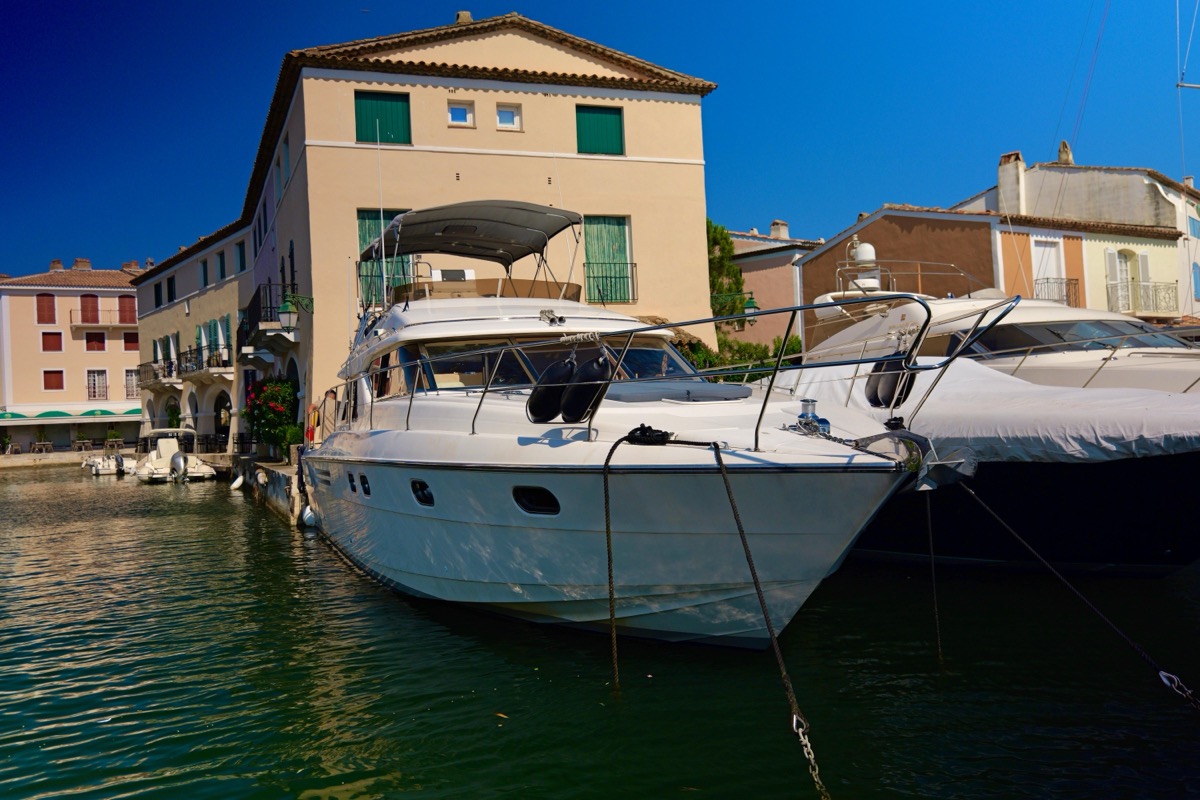
A pre-owned yacht can be an excellent acquisition or a source of unforeseen expense over several seasons. In any pre-owned yacht purchase, the difference is not decided by the listing, but by the quality of the appraisal, the coherence of the intended cruising programme and the rigour of the process before signature.
In this market, the real question is not simply finding an attractive vessel. It is buying a boat suited to your use, at the right price, with clear visibility on its true condition, its future costs and its resale value. This is where the gap between a sound purchase and a poor decision becomes very significant.
Buying a pre-owned yacht: begin with the right brief
The first mistake is to look for a model before defining the project. A yacht should be chosen first and foremost according to how it will be used. A vessel conceived for day trips between Cannes and Saint-Tropez does not answer the same requirements as a boat intended for family cruising over several weeks in the Mediterranean.
Size is only one criterion among many. The number of cabins, the volume on board, fuel consumption, the crew required, the hull type, the age of the boat, ease of handling and the maintenance budget often have far more bearing on an owner's genuine satisfaction.
A serious brief should answer a few simple questions. Will you cruise mainly by the day, at weekends or for extended periods? Do you intend to drive the boat yourself or take on a captain? Will the yacht be based on the Cote d'Azur year round, moved between several ports, or offered occasionally for charter? The more precise the answers, the more relevant the selection.
What the listing does not always tell you
When buying a pre-owned yacht, an attractive presentation is never enough. Photographs flatter volume, line and atmosphere. They rarely show genuine wear to the upholstery, paint touch-ups, the state of the bilges, signs of damp, the standard of mechanical maintenance or the quality of past work.
Two yachts of the same model and year, offered at similar prices, can nonetheless be very different. One will have had an attentive owner, regular technical follow-up and a demanding crew. The other will have accumulated deferred maintenance that resurfaces after the sale. On vessels from 12 to 40 metres, those differences quickly translate into substantial sums.
This is why rigorous screening at the outset saves time. It avoids pointless viewings and allows attention to be focused on the boats that genuinely merit closer analysis.
The technical checks that really matter
A survey is only worth having if it goes beyond the specification sheet. The main engines, generators, running hours, electronics, air conditioning, safety equipment, the condition of the teak, the tanks, batteries, shaft lines and stabilisers all need to be examined methodically. On some yachts the overall appearance remains flattering while the technical systems tell quite another story.
The hull and underwater sections also call for particular attention. Depending on the material and the boat's past programme, the points to watch will differ. A vessel used intensively in charter is not necessarily to be ruled out, but it must be assessed with even greater precision. Heavy use may indicate rigorous upkeep, or it may reveal accelerated wear. Everything depends on the history and the standards applied on board.
A sea trial remains essential. It allows you to verify how the yacht behaves, that equipment functions correctly under load, along with vibration, engine temperatures, acoustic comfort and the overall coherence of the boat. Certain faults only reveal themselves under way.
The right price is not always the lowest price
On paper, a vessel priced below the market can look appealing. In practice it often conceals outstanding work, incomplete documentation, a layout that is difficult to resell or a less transparent history. Conversely, a yacht offered slightly higher may prove the better proposition if it has benefited from consistent maintenance and recent investment.
The purchase price must therefore be set within the total cost of ownership. A boat that is cheaper to buy can cost a great deal more over the first twenty-four months. Hauling out, engine overhauls, electronics to bring up to date, upholstery, safety equipment, the tender, insurance, berthing and crew all quickly alter the equation.
In a pre-owned yacht purchase, serious negotiation rests on facts. Maintenance history, survey findings, the state of consumables, administrative compliance, where the model sits in the market and observed selling times provide a far more reliable basis than commercial pressure alone.
The documents to check before any firm offer
The administrative side is often underestimated, yet it determines the security of the transaction. You need to confirm the identity of the seller, their capacity to sell, the flag, the chain of ownership, the absence of charges or registrations, VAT compliance according to the boat's situation, and consistency between identification numbers and the documents supplied.
Maintenance invoices, service reports, manuals, equipment certificates and previous survey reports are equally useful. A clear file does not guarantee that a yacht is perfect, but it indicates how conscientiously she has been looked after. Patchy documentation, by contrast, calls for greater caution.
Depending on the type of vessel, the build year and the country of registration, these verifications can become more technical. It is precisely in these less visible areas that mistakes prove most expensive.
Recent yacht or older model?
There is no universal answer. A recent yacht generally offers more current standards in design, equipment and sometimes energy efficiency. It may also limit certain works in the short term. Against that, its residual depreciation and entry price are higher.
An older, well-maintained model can be a very sound choice, particularly where the build is well regarded, the history transparent and the refit already carried out. It does, however, require a more experienced eye. Beyond a certain age, the question is no longer simply whether the boat is handsome or seaworthy. You need to establish precisely what has been renewed, what will need renewing and within what timeframe.
The right decision therefore depends less on the year than on condition, history and how long you intend to keep her.
The importance of the programme after purchase
Buying the right yacht also means anticipating what happens after delivery. Many buyers concentrate on the transaction and then discover the operational reality. Running a yacht calls for clear organisation, even on mid-sized vessels.
Berthing, the maintenance schedule, insurance cover, familiarisation, the possible recruitment of crew, technical suppliers and administrative follow-up all need planning. If these matters are left unaddressed, the ownership experience can quickly lose its ease.
This is why proper support does not end at the memorandum of agreement. Advice should extend through to the boat genuinely entering service. For clients who expect discretion, time saved and controlled risk, that continuity makes all the difference.
Why expert brokerage genuinely improves the quality of a purchase
In the premium segment, a good broker is not there to push an inventory. Their role is to filter, qualify and protect. That means setting aside vessels that are appealing but ill-suited, asking the seller the right questions, reading between the lines of a technical file, briefing surveyors, negotiating with measure and keeping the buyer's interest firmly in view.
This approach requires practical knowledge of boats in service, not merely of the listings market. It is what gives support such as that of YachtDeals its value, when the analysis draws on genuine operational experience in yachting rather than a purely commercial reading of the file.
In this kind of acquisition, trust is worth more than an apparent discount. Frank advice may lead you to walk away from a boat. That is often a very good decision.
A well-conducted pre-owned yacht purchase does not seek speed at any cost. It seeks to be right. The best yacht is not the one that impresses at the first viewing, but the one that still makes sense once the excitement has passed and the cruising, the maintenance and the realities of ownership begin.