A yacht can look faultless alongside, come with a reassuring maintenance record and carry a price in line with the market. Yet a few hours under way, a careful look through the engine room or a close reading of the invoices can reveal something quite different. Buying a yacht with an expert broker is, above all, about narrowing the gap between first impressions and the true condition of the vessel.
In a market where opportunities move quickly and where some boats are never widely advertised, the adviser's role goes well beyond opening doors. It lies in qualifying the brief, setting aside the yachts that do not merit your time and securing every stage of the transaction. For a discerning buyer, this approach protects both the pleasure of future cruising and the capital committed.
The right yacht matters more than the spectacular one
The first risk when buying is choosing a yacht for her lines, her marque or her specification without checking that she suits the intended use. An 18 metre yacht does not impose the same constraints as a 30 metre. Crew, berthing costs, fuel consumption, the maintenance programme and ease of resale vary considerably with size, year and yard.
Before any shortlist is drawn up, a serious broker clarifies the criteria that genuinely determine an owner's satisfaction: day cruising from Cannes or Antibes, family cruising in the Mediterranean, a long range programme, permanent crew or more hands on ownership. The number of cabins counts, but so do the layout, comfort at sea, the exterior spaces and access to equipment.
The budget should also be considered in the round. The purchase price is only the first line. You need to allow for insurance, the home berth, fuel, routine maintenance, refit work, crew where applicable and periods out of service. A boat offered at an attractive price can prove costlier than a better maintained yacht bought for more.
Buying a yacht with an expert broker: filtering before the viewing
A good broker does not present an endless list of yachts. He explains why certain boats should be ruled out, even when they appear to meet the brief. That selectivity is particularly valuable on the brokerage market, where a boat's condition depends less on her age than on the quality and consistency of her upkeep.
Reading a boat beyond her specification sheet
Sales particulars set out the engines, dimensions, running hours and declared equipment. They do not always say whether services were carried out at the right time, whether a repair addressed the cause of a problem or merely its symptom, or whether the crew maintained the yacht to the expected standard.
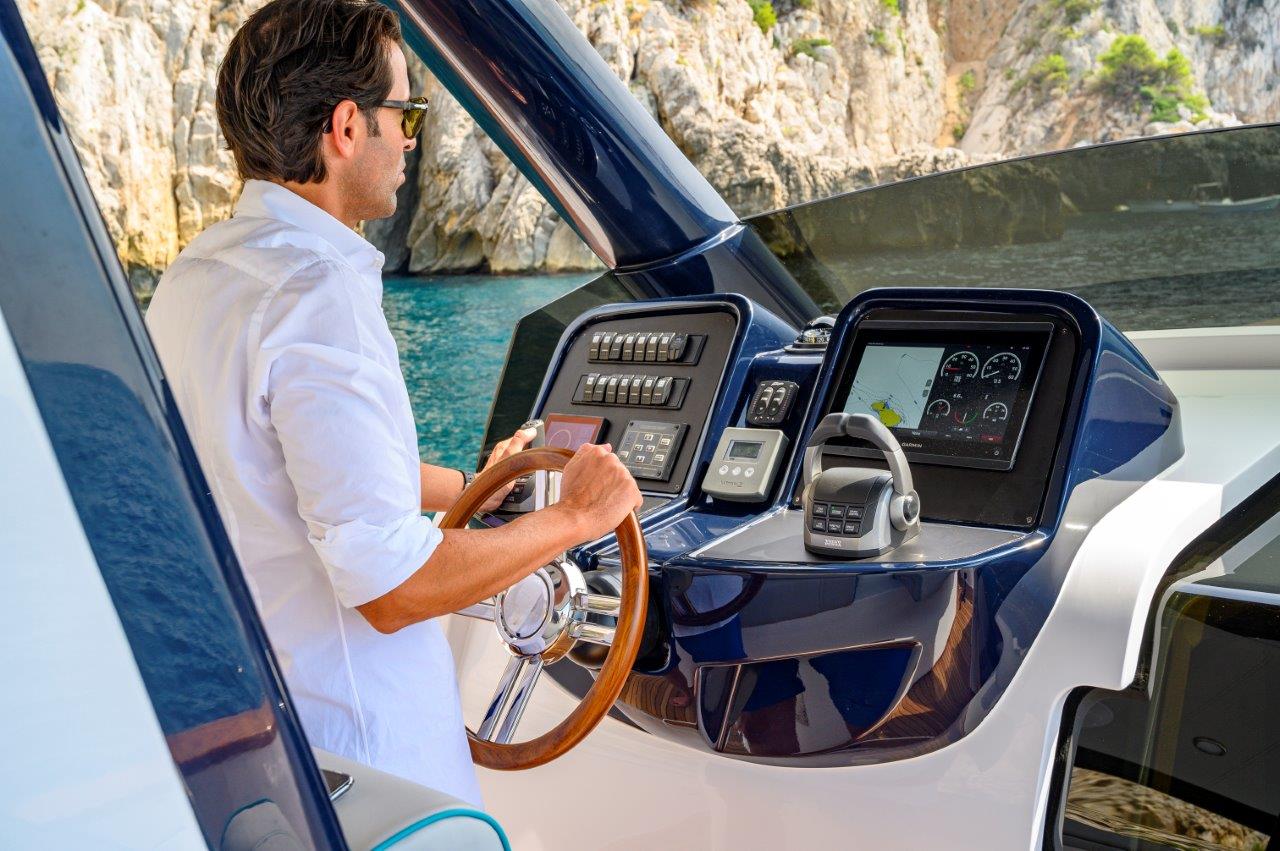
Operational experience makes the difference here. A professional who has run boats and worked on board knows how to assess access to machinery, the layout of the helm station, the state of the technical spaces, the coherence of the equipment and the signs of maintenance endured rather than managed. He can also identify worthwhile improvements after purchase, and separate those that concern comfort from those essential to safety or reliability.
This reading is no substitute for an independent survey. It does, however, allow you to decide whether a boat merits going further. That is a significant saving of time, particularly for international buyers or business owners whose diaries do not allow for viewings without value.
Access to the right market, including off market
The best opportunities are not always the most visible. Some owners wish to sell discreetly and prefer a targeted approach. A broker established within the yachting community is in direct contact with other professionals, captains, managers and owners, which can make it possible to identify a yacht before she is openly marketed.
Such access is no promise of finding the perfect yacht straight away. What it provides above all is better qualified information: the reason for sale, genuine availability, the scope for negotiation, work to anticipate and the known history of the vessel. Trust then counts for far more than a simple introduction.
The checks that secure the decision
Once a yacht has been shortlisted, the purchase must follow a precise process. A thorough inspection alongside is necessary, but never sufficient on its own. A sea trial allows you to observe how the boat behaves, noise levels, vibration, engine response and how the equipment performs in real conditions.
The offer should be structured with clear conditions, notably on the survey, the sea trial, the documentation and any matters to be regularised before delivery. Haste can cost far more than a few additional days of negotiation.
Four checks deserve particular attention:
- the maintenance history, with invoices, yard reports and the principal mechanical works;
- the administrative and legal position, including title, flag, any registered charges and VAT status;
- an independent survey, ideally entrusted to a surveyor suited to the type and size of yacht;
- the sea trial, which should confirm the stated performance and reveal faults that cannot be detected alongside.
VAT, flag and private or commercial use warrant specific treatment. These matters depend on the seller's position, where the boat lies and the buyer's intentions. Sound advice does not offer a standard answer: it brings in the appropriate specialists where the file requires it, so that the chosen structure is settled before signature.
Negotiating the price, and the right terms
Negotiation is not simply about securing a reduction. It concerns the overall value of the deal. A seller may decline a substantial cut in price yet agree to carry out specific works, update certain equipment, extend an available warranty or leave useful spares and tenders on board. Conversely, a low price may conceal a works schedule incompatible with your first season afloat.
The broker prepares this discussion using relevant comparables, the condition observed and the estimated cost of bringing the yacht up to standard. He must also know when not to press. If the seller is unrealistic, if the documentation is incomplete or if the defects found exceed an acceptable level of risk, walking away is sometimes the most rational decision.
That candour is central to an advisory relationship. The aim is not to close a deal at any cost, but to buy a yacht you can enjoy with confidence and sell well when the time comes.
After signature, handover remains decisive
Delivery is an operational stage, not a formality. It covers verification of what was agreed, the inventory, transfer of documents, familiarisation with the onboard systems and the scheduling of initial servicing. For a new owner, a few hours spent on safety procedures, equipment operation and the particularities of the yacht will remove a great deal of uncertainty on board.
It is also sensible to prepare the season from the moment of purchase: berth, insurance, crew if required, a management agreement, winter works and a servicing schedule. A well maintained yacht holds her value better, offers greater availability and inspires more confidence at resale.
YachtDeals supports this phase with the same rigour as the initial search, because the quality of a purchase is also measured in the months following delivery. The right yacht is not only the one that appeals at the viewing: it is the one that remains simple, reliable and consistent with your intentions in use. Taking the time to insist on that consistency is often the best decision to make before putting to sea.