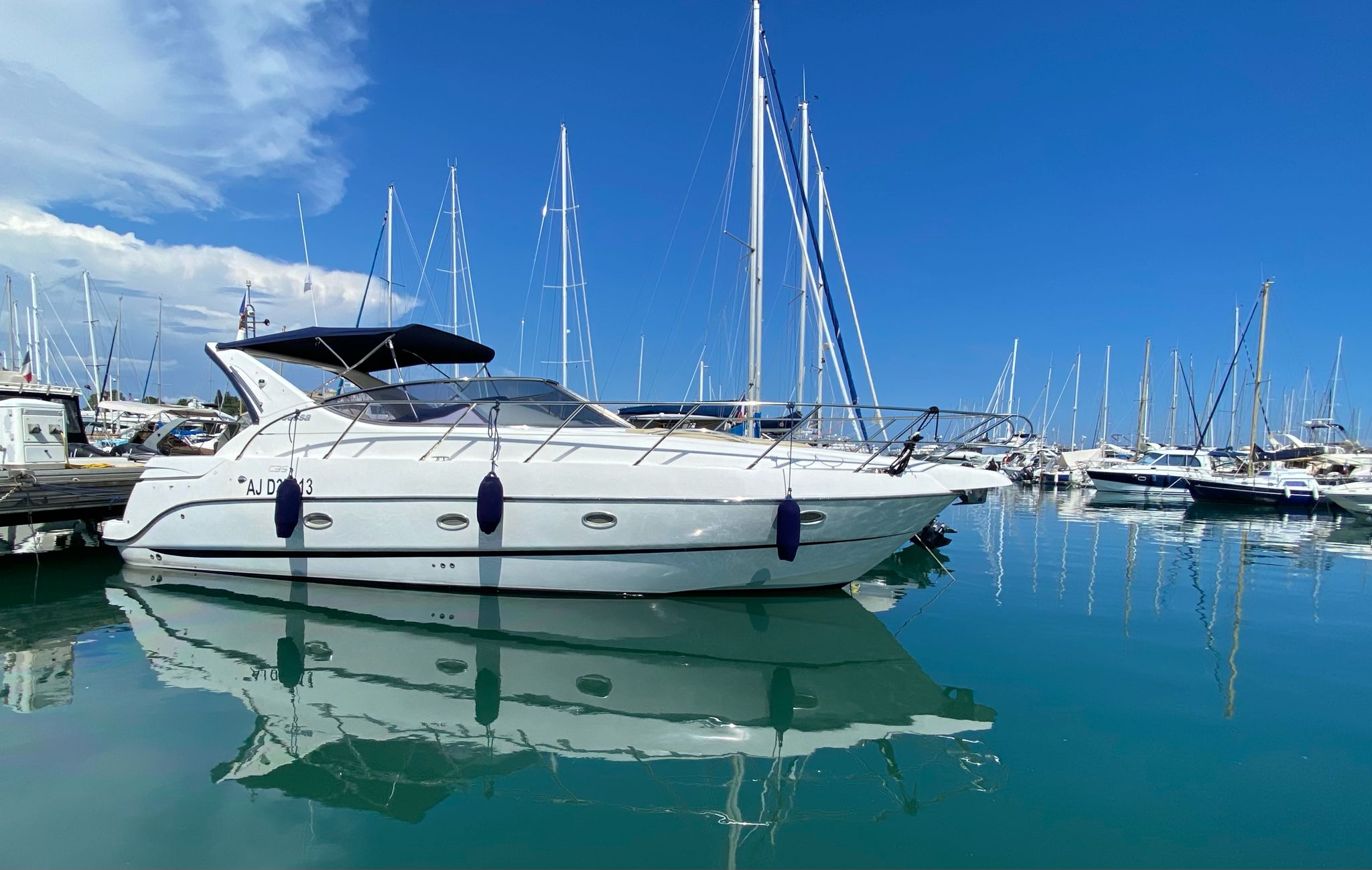
A yacht can look faultless at first sight and still conceal hidden costs, structural defects or a maintenance history that is altogether too thin. Buying a pre-owned yacht is not, therefore, a matter of spotting an attractive listing. It is about establishing whether the vessel genuinely matches your programme, your standards and the reality of the market.
In this segment, mistakes are rarely minor. Poorly documented engines, ageing electronics, incomplete paperwork or an asking price disconnected from the true condition of the boat can turn an enjoyable purchase into a burdensome file. That is precisely why a selective, unhurried and methodical approach makes the difference.
Why buying a pre-owned yacht can be an excellent decision
The brokerage market often offers one straightforward advantage: access to a vessel that is better equipped, larger or better powered than an equivalent budget would allow when buying new. On yachts of 12 to 40 metres, the fall in value over the first few years can create very good opportunities, provided you can read beyond the sales presentation.
A pre-owned yacht is also available sooner. For a buyer who intends to cruise the Mediterranean from next season, avoiding build and specification lead times can be decisive. Sought-after models have, in addition, already proved their sea-keeping, their ease of operation and their resale value.
There is a counterpoint. Two yachts from the same yard, of the same year and the same length, can differ considerably depending on their use, their crew, their maintenance and any refits carried out. This is where judgement matters far more than a simple comparison of specification sheets.
Buying a pre-owned yacht begins with a clear brief
The first filter is not the boat. It is your use of it. A yacht intended for day trips between Antibes and Saint-Tropez is not chosen in the same way as a vessel conceived for several weeks aboard with crew, guests and longer passages.
The right questions must therefore be asked from the outset. How many people will regularly be aboard? Do you want strictly private use, or partial charter operation? Are you looking for a sports cruiser, a flybridge, an explorer or a displacement yacht geared towards comfort? Does your home port impose constraints on draught, beam or berth availability?
This stage avoids a common error: buying a boat that is impressive on paper but poorly matched to how it will actually be used. A yacht that is too complex to operate, too costly to crew or ill-suited to your cruising area usually ends up being used less than intended.
The true budget never stops at the purchase price
In this market, budgetary discipline is a sign of command, not of restraint. The purchase price is only the entry point. You must factor in transfer costs depending on the flag, the survey, any transport, insurance, berthing, routine maintenance, winter lay-up, consumables, technical upgrades and, depending on size, crew salaries and associated charges.
A properly maintained yacht sometimes costs more to buy but less to own. Conversely, a vessel offered at an attractive level may quickly demand significant spending on upholstery, paintwork, electronics, air conditioning, generators or engine overhauls. The best purchase is not always the cheapest. It is the one whose total cost remains consistent with your project.
What to check before committing
A serious shortlist rests on concrete evidence. The maintenance history should be legible, regular and documented. Engine hours must be read with nuance: a low reading is not automatically an advantage if the boat has seen little use but has aged badly alongside. A yacht used regularly and followed rigorously may well present a healthier profile.
Invoices, technical reports, maintenance logs, safety certificates, builder documentation and any refit works give a first picture of how the boat has been managed. It is also worth examining the seller's status, the clarity of ownership, any encumbrances or restrictions, and the compliance of the flag.
Visual inspection counts too, provided it is conducted methodically. The condition of the deck, joinery, seals, bilges, engine room, navigation equipment and comfort systems often reveals far more than the decor or the quality of the photographs. A clean boat is not necessarily a well-maintained one. A well-kept boat is recognised above all by the consistency of its details.
Survey and sea trial are not formalities
When a yacht genuinely holds your attention, an independent survey is an essential step. It should cover the structure, the machinery, the electrical installations, safety equipment, any moisture ingress, the condition of the appendages and, as applicable, generators, stabilisers or hydraulic systems.
The sea trial matters just as much. It is not there merely to confirm a feeling. It allows you to observe the cold start, vibration, operating temperatures, the way the engines come up to speed, behaviour at various speeds, noise levels aboard, the response of the controls and the overall coherence of the boat in real conditions.
A convincing trial does not guarantee the absence of defects, but a trial conducted casually often misses the faint signals that later prove expensive. On a premium vessel, these details bear directly on life aboard as well as on future resale value.
How to negotiate a pre-owned yacht intelligently
Serious negotiation is conducted neither in haste nor as a contest. It is built on three elements: the yacht's true position in the market, the discrepancies identified during the checks, and the seller's motivation.
An asking price may look ambitious yet remain defensible if the vessel is rare, impeccably documented and ready to cruise without immediate investment. Conversely, meaningful room for negotiation may exist on a boat that has been on the market for some time, with irregular maintenance or identified works outstanding.
You also need to distinguish normal wear from defects that affect safety, reliability or value. Not everything justifies a significant reduction. Credible negotiation rests on facts, not on posturing. That is often what allows a clean agreement to be reached, within reasonable timescales and without putting the transaction at risk.
The most common buyer mistakes
The first is buying too quickly after a seductive viewing. The second is overestimating how easily a larger yacht can be managed. The third is regarding brokerage as a simple introduction service, when good representation exists above all to filter, verify and protect the buyer.
Another frequent error is to focus solely on style or marque. The prestige of the yard counts, of course, as does the designer's signature. But at a comparable level, condition, the quality of technical updates and operational coherence often prove more decisive than the name on the hull.
Finally, many buyers underestimate the period after the sale. Familiarisation, berthing arrangements, insurance, forming or adjusting the crew and the maintenance schedule all shape the first months of ownership. A well-conducted purchase should prepare that transition, not just the signature.
Buying a pre-owned yacht with expert representation
In a discreet, international and at times opaque market, access to the right vessels is not enough. You still need to know which ones truly merit your attention. Sound representation saves time, sets aside the weaker candidates, puts the right questions to the right people and secures both the technical and administrative stages.
This is particularly true for buyers who want a clear view, without overpromising. An experienced adviser does not try to make you buy quickly. He should be able to say no, to set aside an appealing but incoherent boat, or to recommend waiting for a better opportunity. At YachtDeals, this rigour in selection and this operational reading of a boat form the real value of the advice.
Buying a pre-owned yacht is less a matter of impulse than of judgement. When the boat is well chosen, properly verified and sensibly negotiated, it ceases to be a source of uncertainty and becomes what it should have been from the start: an asset for pleasure, considered with clarity and ready to be used with confidence.